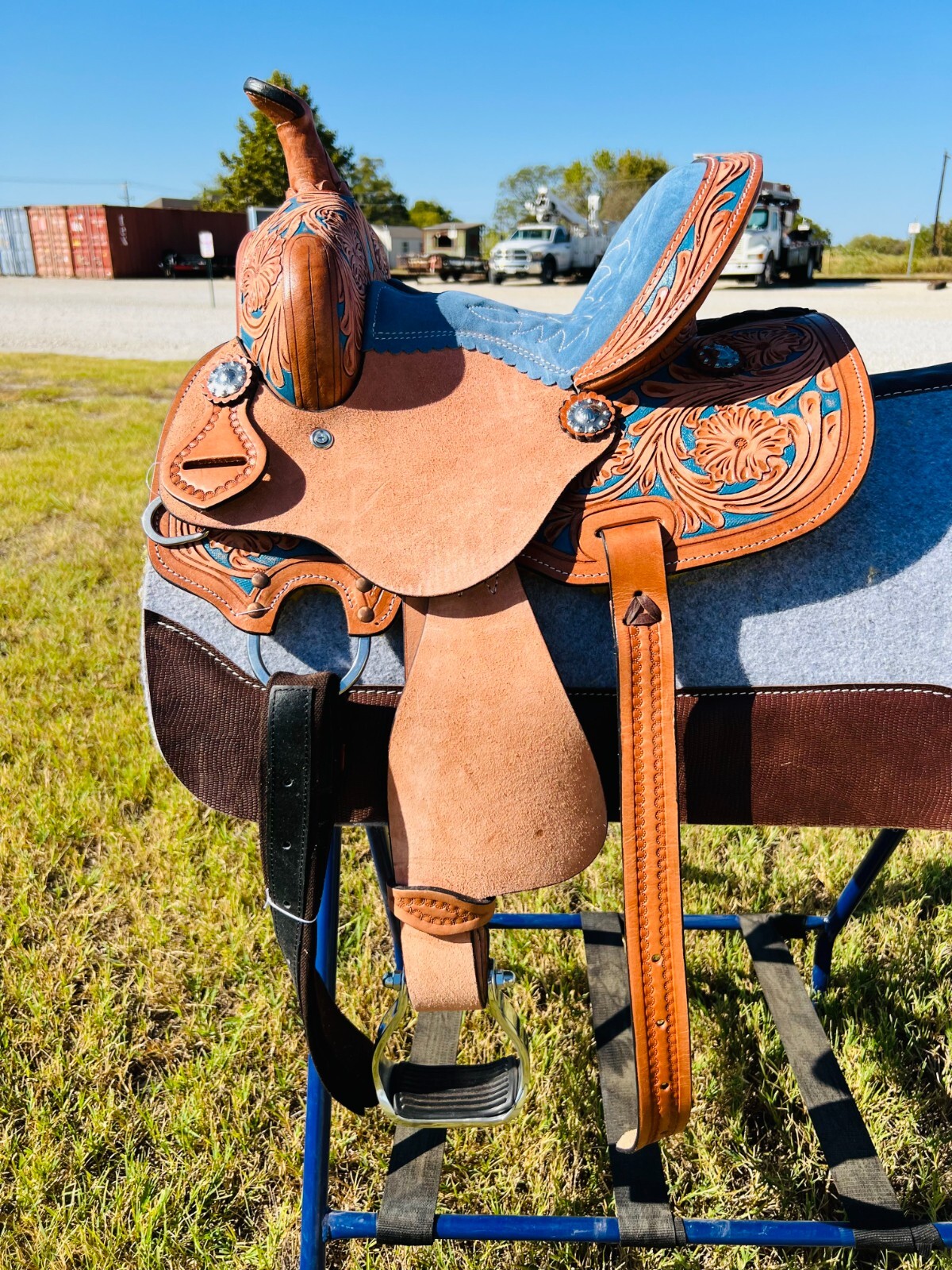

Photos from current listings. Actual item, color, and included accessories may vary.
Barrel Horse Saddle Buying Guide
A barrel horse saddle is a specialized western saddle built for high-speed, tight-turn barrel racing, where weight, seat security, and skirt clearance directly affect a horse's athleticism and a rider's safety. The core trade-off is between lightweight synthetic or partial-leather builds that maximize speed and low-maintenance durability versus traditional full-leather tooled saddles that offer grip and classic aesthetics at added weight. Choose a true barrel-racing tree (narrower, shorter skirt, deep pocket) if you compete; a general-purpose western saddle is a compromise that will hinder tight turns and high-speed balance.


At a glance
- Category
- Equestrian Saddles & Pads
- Data updated
- Nov 19, 2026
Current offers
Highlights
- Barrel saddles use a specific tree: a narrower 6.5-7 inch gullet, shorter rounded skirt, and a deep seat pocket to lock the rider in during sharp turns and high-speed runs.
- Tree material is the durability watershed: fiberglass-covered wood or full synthetic trees resist warping and moisture; cheap wooden trees can crack under the torque of barrel turns.
- Leather versus synthetic determines weight and care: full-grain leather saddles typically weigh 22-28 lb and need oiling; synthetic or cordura builds run 15-20 lb and wipe clean but offer less grip.
- Skirt length and rigging position are performance-critical: shorter, forward-hung skirts (under 24 inches) prevent hindering the horse's shoulder and hip drive; full-length skirts suit trail, not barrels.
Best use cases
- Best fit: Competitive barrel racers at any level should pick a true barrel-racing tree with a 6.5-7 inch gullet, deep seat, and short rounded skirt—skip general-purpose western saddles that restrict shoulder movement.
- Best fit: Youth or beginner riders on a budget can use a lightweight synthetic barrel saddle (15-18 lb) with adjustable stirrups; skip heavy tooled leather show saddles that add 10+ lb and require constant care.
- Wrong fit: Trail riders and pleasure riders should skip dedicated barrel saddles; their deep pocket and narrow twist become uncomfortable on long rides—choose a trail or endurance saddle instead.
- Wrong fit: Riders on wide-backed or draft-cross horses must avoid standard 6.5-inch gullet barrel trees; select a wide-fit barrel saddle (7.5-8 inch gullet) or the tree will pinch the shoulders and cause soreness.
Buying tips
- Match gullet width to your horse's withers: 6.5-7 inches fits most Quarter Horses and typical barrel prospects; 7.5-8 inches is required for wide or draft-cross builds—never force a narrow tree onto a wide horse.
- Weigh the saddle before buying: true barrel saddles stay under 25 lb; anything over 28 lb is a trail or roping build that will slow your horse's acceleration and turn rate.
- Check tree construction explicitly: demand a fiberglass-covered wood, full synthetic, or rawhide-covered tree with a written warranty of at least 5 years; unsealed wooden trees are a false economy.
- Verify rigging style: three-way or adjustable rigging lets you tune the pull for barrel turns; fixed front rigging on a barrel saddle often signals a general-purpose tree, not a competition build.
Specs
| Gullet Width | 6.5-7 in (std) / 7.5-8 in (wide) |
|---|---|
| Tree Material | Fiberglass-wood / Synthetic / Rawhide |
| Saddle Weight | 15-20 lb synthetic / 22-28 lb leather |
| Skirt Length | Under 24 in (barrel) vs 26-30 in (trail) |
Related searches
What to check before buying
- Measure your horse's withers and gullet clearance with a flexible tape before choosing a tree width—most barrel saddles need 6.5-7 inches, but wide horses need 7.5-8 inches.
- Confirm your weight and riding discipline: saddles rated for riders over 200 lb need a reinforced tree and heavier leather; lightweight synthetic builds under 15 lb are for youth or lighter adults only.
- Check your saddle pad thickness: a 1-inch felt or wool pad pairs with a barrel saddle's close-contact skirt; thick 2-inch pads can negate the close-contact benefit and cause pressure points.
- Verify the stirrup and fender setup: barrel saddles need adjustable fenders that let you shorten stirrups for a balanced, forward seat; fixed or long fenders indicate a trail or roping saddle.
FAQ
Data sources: eBay / Amazon listings and product attribute feeds Data updated Nov 19, 2026.
Some links on this page are affiliate links. If you buy after clicking one, we may earn a commission at no extra cost to you. This does not change which products appear here or their order. Affiliate disclosure.