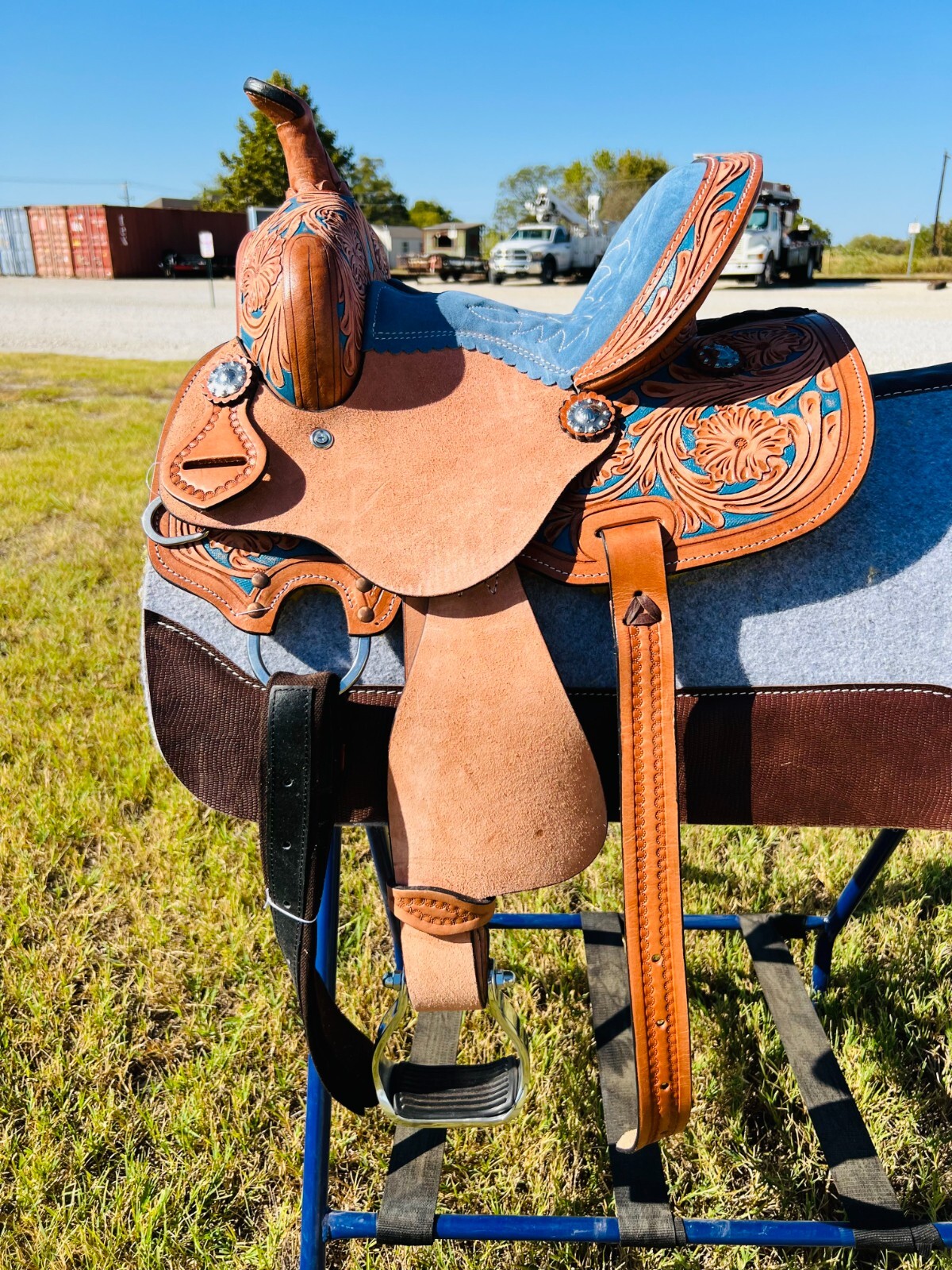

Photos from current listings. Actual item, color, and included accessories may vary.
Barrel Saddle Buying Guide
A barrel saddle is a specialized western saddle built for tight turns and high-speed runs around barrels, defined by a deep seat, high cantle, and forward-hung stirrups. The core trade-off is between lightweight synthetic trees for speed and traditional leather-over-wood for durability and feel. Choose a true barrel tree with 6.5–8 inch gullet and reinforced horn; skip anything marketed as 'barrel' that uses a flat, wide trail seat or a flex tree without speed-event bracing.


At a glance
- Category
- Equestrian Saddles & Pads
- Data updated
- Nov 18, 2026
Current offers
Highlights
- Barrel saddles use a reinforced wood or synthetic tree with a 6.5–8 inch gullet and 4–5 inch cantle for deep, locked-in seating during sharp turns.
- Seat sizes run 12–17 inches; juniors and small riders need 12–14 inch seats, while average adults fit 14–16 inch and larger riders 16–17 inch.
- Forward-hung stirrups (3–5 inches ahead of center) and a narrow twist keep the rider balanced over the horse's center of gravity at speed.
- Skirt length 24–28 inches and weight 18–28 pounds separate youth/lightweight models from full-skirt adult competition rigs.
Best use cases
- Best fit: gymkhana, barrel racing, and pole bending — pick a 6.5–7 inch gullet, 4-inch cantle, and forward stirrups; skip trail saddles with wide 8+ inch gullets.
- Best fit: youth or small riders — choose a 12–14 inch seat, 22–24 inch skirt, and lightweight 18–22 lb synthetic tree; skip full 28 lb adult rigs that overpower small horses.
- Best fit: training young or wide-backed horses — select a 7–8 inch gullet with semi-quarter horse bars; skip narrow 6.5 inch gullets on stocky builds.
- Wrong fit: endurance or long-distance trail riding — a deep barrel seat restricts hip motion; choose an endurance or trail saddle instead.
Buying tips
- Measure gullet width at the pommel: 6.5–7 inches fits narrow to average; 7.5–8 inches fits wide, flat-backed horses; never guess — use a gullet gauge.
- Match seat size to rider: 12–13 inch for children under 5 ft, 14–15 inch for average adults, 16–17 inch for riders over 5 ft 10 in or 200 lb.
- Prefer leather over a wooden or fiberglass-covered tree for competition durability; synthetic trees are lighter but flex more under hard turns.
- Check horn attachment: a 3–4 inch horn bolted through the tree with reinforced neck is required for barrel racing; glued or decorative horns fail under rope pressure.
Specs
| Gullet Width | 6.5–8 in (narrow to wide) |
|---|---|
| Seat Size | 12–17 in (youth to adult) |
| Cantle Height | 3.5–5 in deep seat |
| Tree Material | Wood/fiberglass vs synthetic flex |
Related searches
What to check before buying
- Measure your horse's withers and back: gullet must clear the wither by 2–3 fingers with a saddle pad in place; a barrel saddle with too-wide gullet will rock and bridge.
- Confirm seat size against rider height and weight; a seat too small forces you behind the cantle and kills turn response.
- Verify stirrup leather length and fender adjustment range covers your leg from knee to ankle; forward-hung fenders need 2–3 inches of extra length.
- Check pad compatibility: barrel saddles need a 1-inch or 3/4-inch felt or wool pad cut to skirt shape; oversize pads bunch under the forward stirrups.
FAQ
Data sources: eBay / Amazon listings and product attribute feeds Data updated Nov 18, 2026.
Some links on this page are affiliate links. If you buy after clicking one, we may earn a commission at no extra cost to you. This does not change which products appear here or their order. Affiliate disclosure.