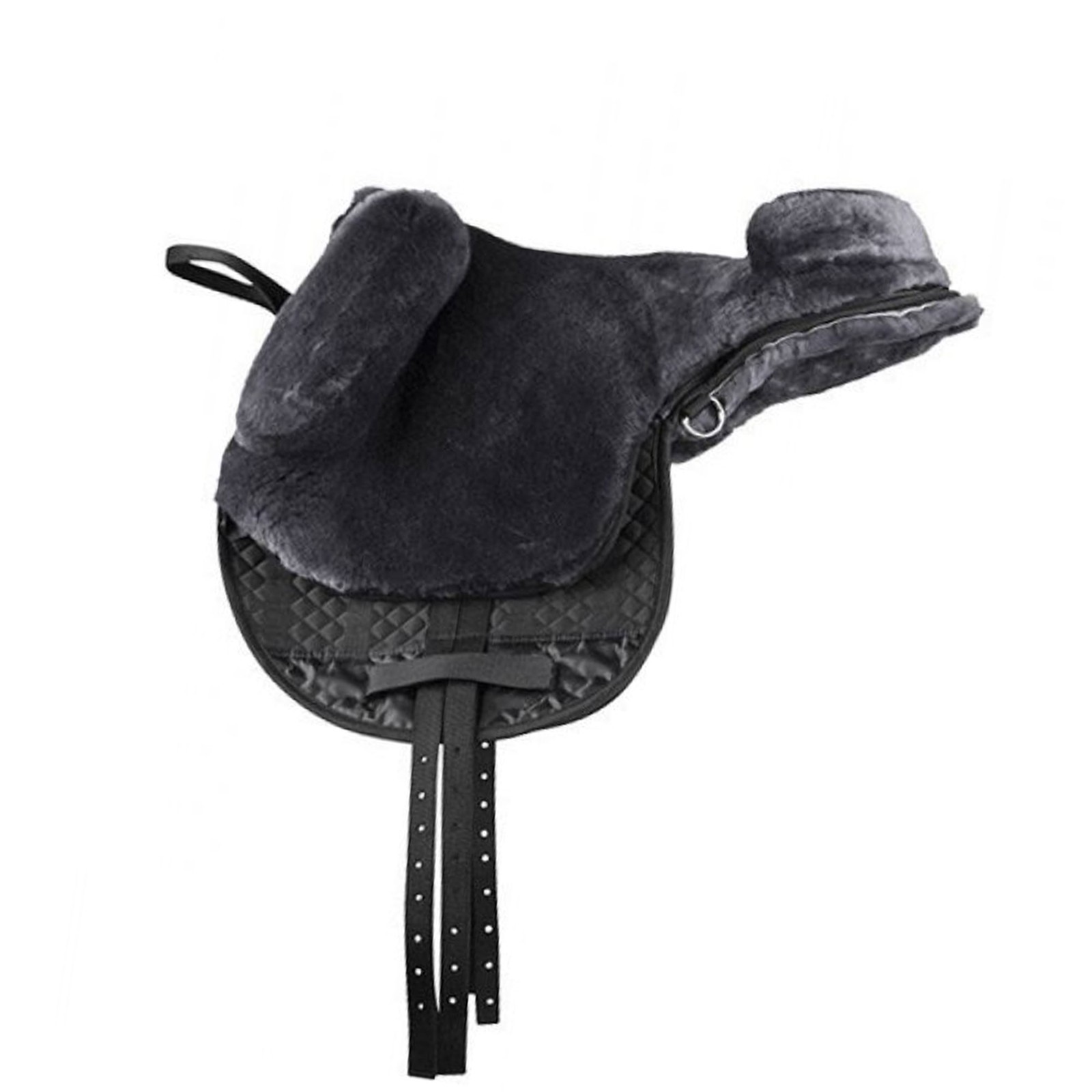

Photos from current listings. Actual item, color, and included accessories may vary.
English Saddle Pad Buying Guide
English saddle pads are the critical interface between horse and saddle, and their performance hinges on a single trade-off: thin, shape-retentive quilted pads for close saddle fit versus thick, high-loft fleece or memory-foam pads for pressure relief and back protection. The decisive rule is to match pad thickness and contour to your saddle's panel type and your horse's back conformation — a pad that is too thick will rock a close-contact saddle, while a pad that is too thin will concentrate pressure under a narrow all-purpose panel.


At a glance
- Category
- Equestrian Saddles & Pads
- Data updated
- Nov 16, 2026
Current offers
Highlights
- Quilted cotton or poly-cotton pads typically run 8–12 mm thick with 6–8 mm foam fill; high-loft fleece pads run 20–30 mm and require a saddle fitted 1–2 widths wider.
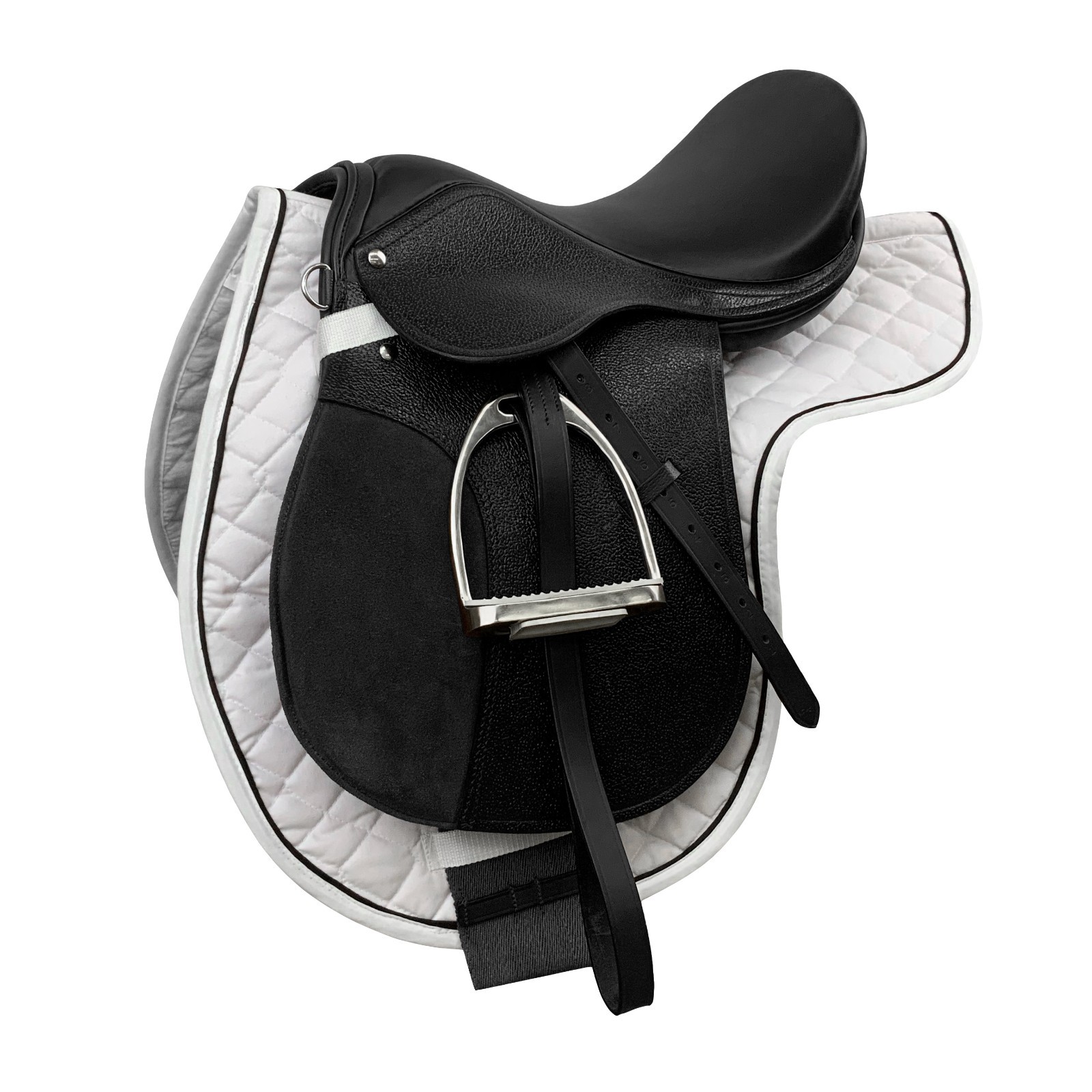
- Pad shape must match saddle panel geometry: dressage pads are longer and more square (drop 20–24 in) to cover the longer dressage panel, while all-purpose and close-contact pads are contoured and shorter.
- Fleece lining wicks and cushions but compresses over time; closed-cell foam and memory-foam cores retain loft and pressure distribution far longer than open-cell fleece.
- Correct fit requires 1–2 inches of pad visible in front of and behind the saddle panels — excess pad behind the cantle bunches and creates pressure points.
Best use cases
- Best fit: pair a contoured all-purpose quilted pad with a close-contact or all-purpose saddle for daily schooling where close feel and minimal bulk matter.
- Best fit: choose a high-loft fleece-lined or memory-foam pad for a horse with a prominent wither, cold back, or a saddle fitted slightly wide — but confirm you can re-fit the saddle to accommodate the extra 10–20 mm of stack.
- Wrong fit: skip thick Western-style or square dressage pads under a close-contact jumping saddle — the excess length and bulk will rock the saddle and restrict the horse's shoulder.
- Wrong fit: skip a thin quilted pad under a saddle with a narrow, hard panel on a high-withered horse; step up to a contoured pad with cut-back wither clearance instead.
Buying tips
- Measure your saddle's panel length and flap drop before buying: dressage pads need 20–24 in drop, all-purpose 18–21 in, and close-contact 16–19 in to avoid bunching behind the cantle.
- Match fill to saddle fit: if your saddle is correctly fitted, use an 8–12 mm quilted pad; if the saddle sits slightly wide or the horse is cold-backed, use a 20–30 mm fleece or memory-foam pad and have the saddle re-checked.
- Check wither clearance: cut-back or high-wither pad shapes clear 1–2 in more spinal space than standard square pads and are essential for horses with prominent withers.
- Choose the lining by durability: closed-cell foam and memory foam resist compression and stay lofted over hundreds of rides, while open-cell fleece flattens and mats within a season of heavy use.
Specs
| Pad Type | Quilted / Fleece / Memory Foam |
|---|---|
| Pad Thickness | 8–12 mm quilted vs 20–30 mm fleece |
| Discipline Shape | Dressage / All-Purpose / Close-Contact |
| Wither Clearance | Standard vs cut-back high-wither |
Related searches
What to check before buying
- Measure your saddle's panel length and flap drop in inches, then confirm the pad's spine length and drop exceed those dimensions by 1–2 in front and rear.
- Confirm your horse's wither profile (prominent, flat, or mutton) and select a cut-back or high-wither pad shape if the wither sits close to the gullet.
- Check whether your saddle is currently fitted correctly; if it is, a thin quilted pad preserves fit, and any pad over 15 mm requires a saddle re-fit.
- Verify pad material against your climate: breathable cotton and wool blends suit hot, humid conditions, while fleece and foam add warmth and suit cold-backed or clipped horses.
FAQ
Data sources: eBay / Amazon listings and product attribute feeds Data updated Nov 16, 2026.
Some links on this page are affiliate links. If you buy after clicking one, we may earn a commission at no extra cost to you. This does not change which products appear here or their order. Affiliate disclosure.