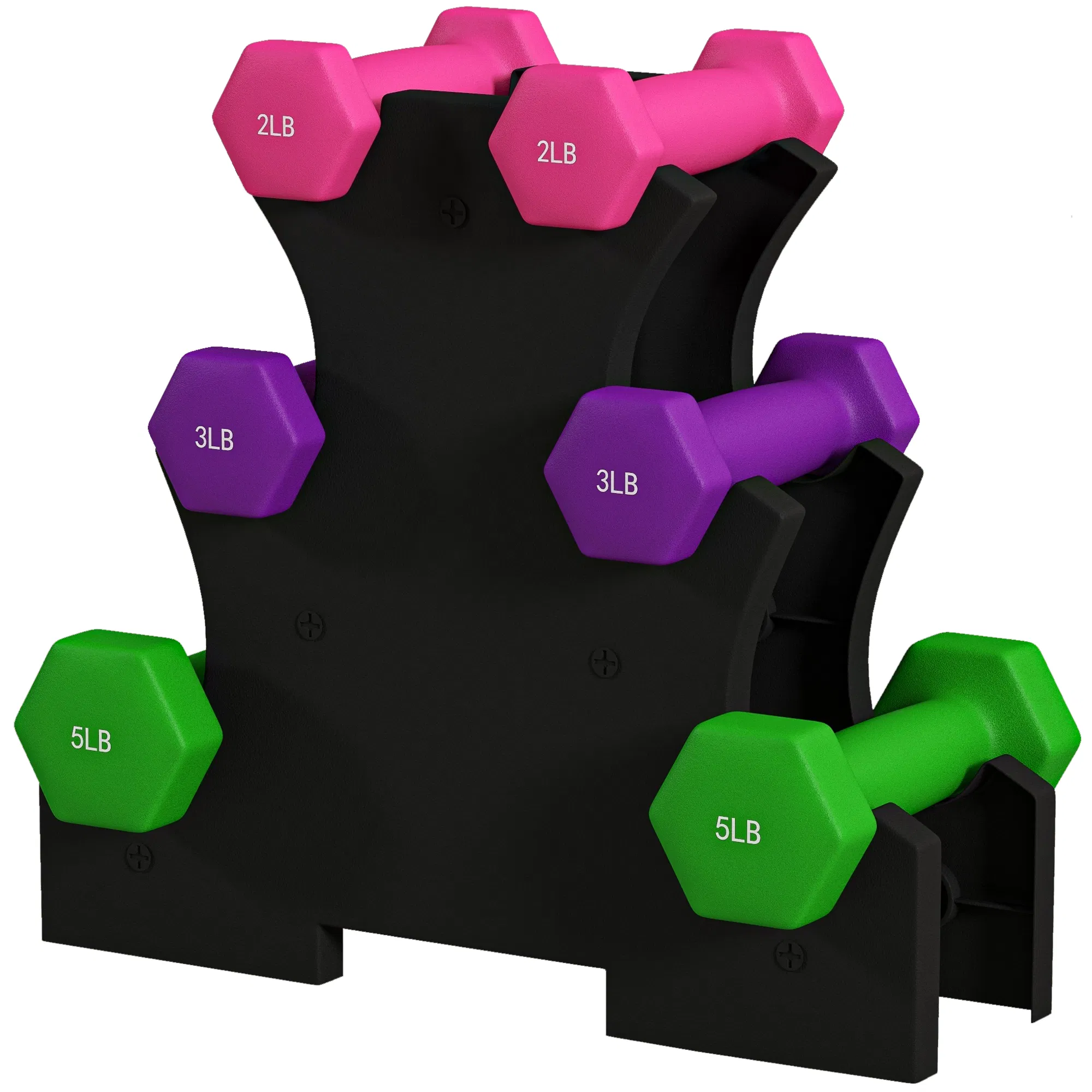

Photos from current listings. Actual item, color, and included accessories may vary.
Dumbbell Set Rack Buying Guide
A dumbbell set rack bundles fixed-weight dumbbells with a dedicated storage stand, trading the flexibility of adjustable dumbbells for instant grab-and-go convenience. The primary trade-off is rack construction and dumbbell material: welded steel with rubber-encased heads protects floors and lasts, while thin tubular stands and vinyl-coated concrete heads are the compromises. The decision rule is simple: buy a welded steel rack rated for at least 1.5x your set's total weight and hex or round rubber heads, and skip any set whose stand uses plastic joints or stamped sheet-metal brackets.


At a glance
- Category
- Barbells, Plates & Dumbbells
- Data updated
- Nov 16, 2026
Current offers
Highlights
- Rack frame construction separates durable from disposable: welded 14-16 gauge steel tubing with a powder coat outlasts bolted or riveted plastic-joint stands that wobble under load.
- Dumbbell head material drives longevity and floor safety: rubber-encased hex or round heads resist chipping and protect flooring, while vinyl-coated concrete heads crack and smell over time.
- Weight increments determine training utility: 2/3/5 lb pairs suit light toning and rehab, while 5/10/15/20/25 lb pairs are the minimum for meaningful progressive strength work.
- Rack capacity must exceed set weight by a safe margin: a stand rated to 1.5x the combined dumbbell weight prevents sagging, tipping, and weld fatigue.
Best use cases
- Best fit: a home gym corner with 2-3 ft of wall space and a need for quick access during circuit or HIIT training—pick a welded A-frame or tree rack with rubber hex heads in 5-25 lb pairs.
- Best fit: physical therapy or senior fitness at light loads—choose a compact 2/3/5 lb set with a low-profile stand that keeps weights at knee height for easy pickup.
- Wrong fit: anyone planning to squat or press heavy—skip fixed sets entirely and buy adjustable dumbbells or a barbell with plates; fixed sets above 50 lb per hand become rack-space hogs.
- Wrong fit: garages or humid climates with vinyl-coated concrete heads—choose rubber-encased heads and a powder-coated steel rack to resist moisture and odor.
Buying tips
- Size the rack to the set: total all dumbbell weights and choose a stand rated at least 1.5x that figure—a 70 lb set needs a rack rated 105 lb or more.
- Pick rubber-encased hex heads over vinyl-coated concrete: rubber resists cracking, protects floors, and won't develop the chemical smell common to vinyl.
- Check rack footprint against your space: A-frame stands need roughly 2x2 ft, tree racks 2x3 ft, and horizontal racks up to 4 ft wide—measure before buying.
- Match weight increments to your goal: 2/3/5 lb pairs for rehab and toning, 5-25 lb pairs for general fitness, and 5-50 lb pairs only if you have dedicated floor space.
Specs
| Rack Construction | Welded steel vs bolted/plastic-joint |
|---|---|
| Dumbbell Head Material | Rubber-encased hex vs vinyl concrete |
| Weight Increments | 2/3/5 lb light vs 5-25 lb strength |
| Rack Weight Rating | 1.5x combined set weight minimum |
Related searches
What to check before buying
- Measure your floor space and ceiling height: confirm the rack footprint plus 2 ft of clearance on each side for safe pickup and re-racking.
- Verify floor type: rubber or hex heads are mandatory on hardwood and tile; concrete garage floors tolerate either but benefit from rubber.
- Confirm the rack's weight rating exceeds your set's total weight by at least 50% to prevent tipping and weld fatigue.
- Check assembly requirements: welded one-piece racks arrive ready; bolted racks need tools and periodic bolt tightening.
FAQ
Data sources: eBay / Amazon listings and product attribute feeds Data updated Nov 16, 2026.
Some links on this page are affiliate links. If you buy after clicking one, we may earn a commission at no extra cost to you. This does not change which products appear here or their order. Affiliate disclosure.