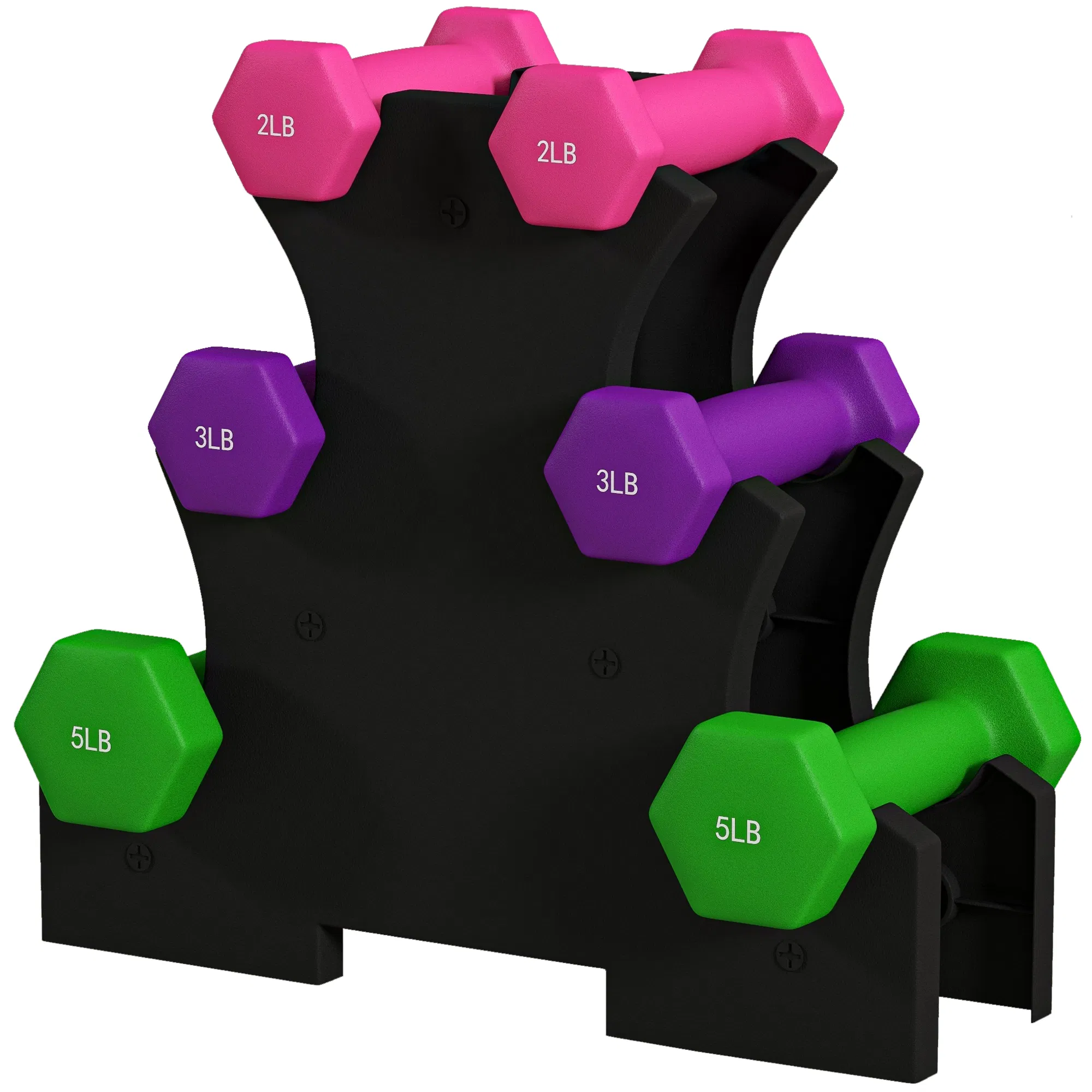

Photos from current listings. Actual item, color, and included accessories may vary.
Dumbbell Set With Rack Buying Guide
A dumbbell set with rack bundles fixed-weight pairs and a storage stand, with the core trade-off being cast-iron or urethane heads on knurled steel handles versus plastic-cement or vinyl-coated budget construction. Durable sets use hex or round steel heads with secure collars and a rack rated above the combined load; compromises rely on threaded plastic collars, loose sand fill, and thin tubular racks that wobble under load.


At a glance
- Category
- Barbells, Plates & Dumbbells
- Data updated
- Nov 16, 2026
Current offers
Highlights
- Head construction separates tiers: cast-iron hex or round heads with enamel or urethane coating resist chipping, while plastic-encased concrete and vinyl-dipped heads crack and loosen over time.
- Handles should be steel with a knurl pattern and either welded fixed heads or threaded collars; plastic spin-lock collars strip and loosen under repeated drops.
- Rack load rating must exceed the total set weight by a safe margin; A-frame and tree racks in 16-14 gauge steel tubing stay rigid, while thin 1-inch tube racks flex and tip.
- Weight increments matter for progression: 2, 3, and 5 lb pairs suit light aerobic and rehab work, while 5 lb jumps from 5 to 25 lb and above serve strength training.
Best use cases
- Best fit: light 2-5 lb pairs for physical therapy, aerobics, and senior fitness—pick a compact A-frame rack that fits a closet or corner.
- Best fit: 5-25 lb pairs in 5 lb increments for general home strength training—choose a steel tree or two-tier rack rated for the full set.
- Wrong fit: buying a fixed 20-50 lb set with a thin wire rack for beginner training—the rack will wobble and the weight jumps are too large for safe progression.
- Wrong fit: plastic-coated concrete sets for anyone who drops weights or trains on a hard floor—chipping and cracking are inevitable.
Buying tips
- Sum all pairs to get total set weight, then confirm the rack's stated load capacity exceeds that by at least 25 percent.
- Match handle diameter to your grip: 1.0-1.2 inch handles suit most hands, while 1.5 inch handles build grip but fatigue smaller hands faster.
- Choose knurled steel handles with a center knurl only if you press overhead; smooth or lightly knurled handles are better for high-rep aerobic work.
- Verify weight tolerance: quality cast-iron heads are within 2-3 percent of marked weight, while concrete-filled heads often vary by 5-10 percent.
Specs
| Head Material | Cast iron vs plastic/concrete |
|---|---|
| Handle Type | Knurled steel / threaded collar |
| Weight Range | 2-50 lb pairs in 5 lb jumps |
| Rack Load Rating | Total set weight +25% |
Related searches
What to check before buying
- Measure floor space for the rack footprint and ceiling height for overhead pressing clearance before choosing A-frame versus tree rack.
- Confirm your floor type—rubber or foam tiles protect cast-iron heads and reduce noise on hardwood or tile.
- Check the rack's base width against doorways and closets if you plan to store it out of sight.
- Ensure the set includes matching collars if using threaded handles, and that the rack holds every pair at its widest dimension.
FAQ
Data sources: eBay / Amazon listings and product attribute feeds Data updated Nov 16, 2026.
Some links on this page are affiliate links. If you buy after clicking one, we may earn a commission at no extra cost to you. This does not change which products appear here or their order. Affiliate disclosure.