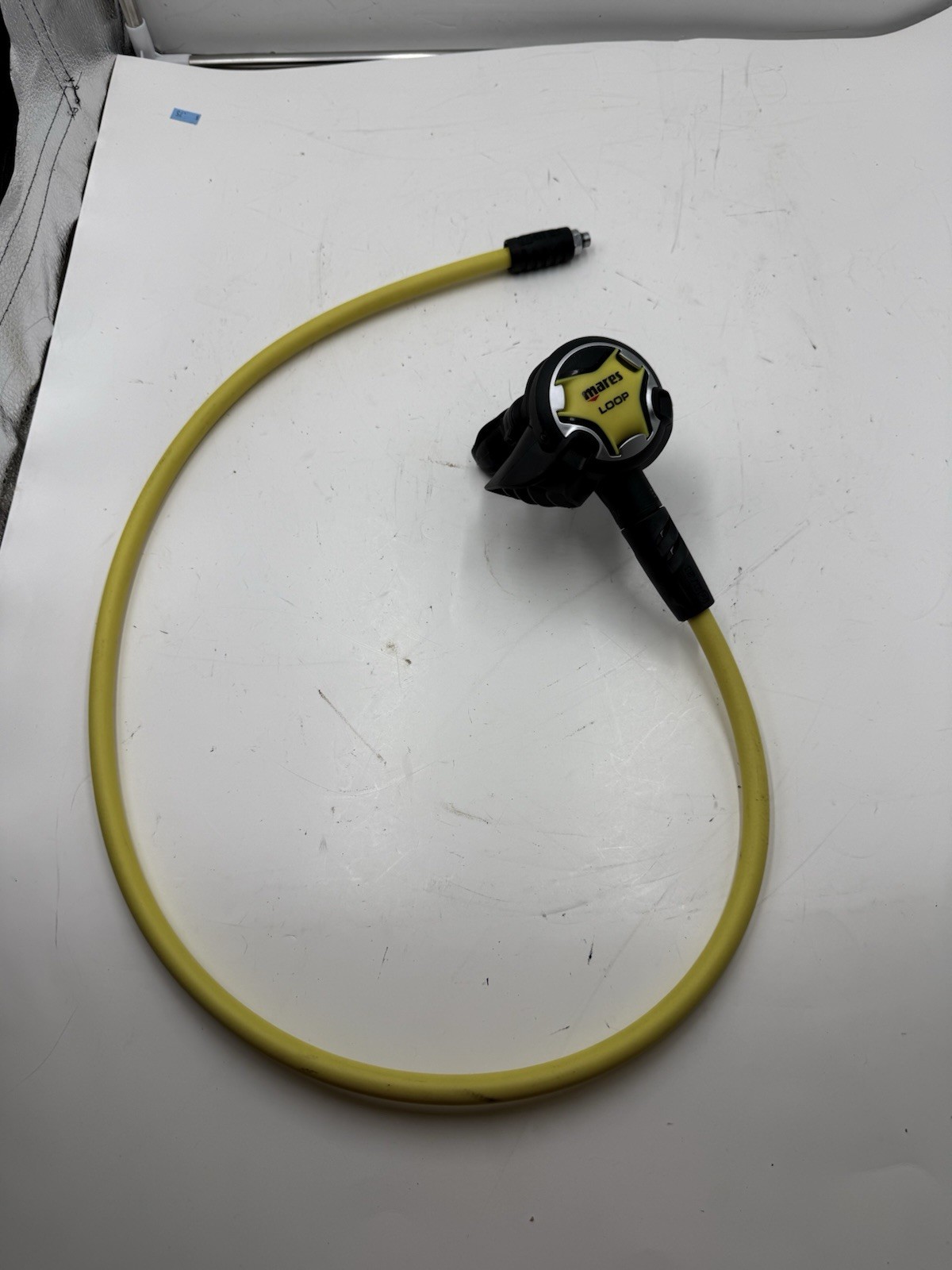

Photos from current listings. Actual item, color, and included accessories may vary.
Mare Scuba Regulator Buying Guide
Mares regulators are a broad Italian-engineered line spanning entry-level piston first stages to sealed-diaphragm cold-water designs and octopus second stages. The core trade-off is piston vs. diaphragm first-stage architecture: pistons deliver high flow and easy breathing in warm water but are not sealed against cold-water icing, while diaphragms are environmentally sealed and cold-water rated. A durable Mares choice means matching the first-stage type to your water temperature and buying a complete balanced set, not a mismatched or unsealed bargain.


At a glance
- Category
- BCD & Dive Regulators
- Data updated
- Nov 18, 2026
Current offers
Highlights
- Mares first stages split into piston (e.g., MR12, Rover) vs. balanced diaphragm (e.g., Abyss, Fusion) — pistons for warm water, sealed diaphragms for cold.
- Cold-water Mares regulators carry the EN 250 rating; unsealed piston models are for water above 10°C/50°F only.
- Second stages use Mares' VAD (Vortex Assisted Design) bypass tube for low inhalation effort; octopus versions are compact and lightweight.
- Balanced diaphragm first stages maintain steady intermediate pressure as tank pressure drops from full to reserve.
Best use cases
- Tropical or warm-water recreational diving (above 10°C/50°F): a piston first stage like the Rover or MR12 is sufficient and lower maintenance.
- Cold water, deep diving, or ice diving: choose a sealed balanced diaphragm first stage (Abyss, Fusion) rated to EN 250 for reliable breathing and icing resistance.
- Buying an octopus or secondary: a dedicated lightweight second stage like the Mares Loop octopus pairs with any Mares first stage and stows compactly in a BCD pocket.
- Skip unsealed piston models for cold-water or murky-water diving; skip unbalanced first stages if you want consistent breathing at depth.
Buying tips
- Match first-stage architecture to water temp: sealed diaphragm for below 10°C/50°F, piston for warm water — this is the single most important durability decision.
- Buy a complete matched set (first stage + primary + octopus) from the same line so intermediate pressure and tuning are compatible.
- Check the second-stage inhalation effort spec — balanced second stages reduce work of breathing as tank pressure falls.
- Confirm the first-stage port configuration: at least 2 HP ports for a SPG and 4+ LP ports for primary, octopus, BCD, and drysuit.
Specs
| First Stage Type | Piston vs Balanced Diaphragm |
|---|---|
| Cold Water Rating | EN 250 sealed diaphragm only |
| Second Stage Design | VAD bypass, balanced vs unbalanced |
| Port Configuration | 2 HP / 4+ LP standard |
Related searches
What to check before buying
- Know your dive water temperature: below 10°C/50°F requires a sealed diaphragm first stage; above that a piston model is acceptable.
- Verify your BCD and drysuit hose fittings are standard 3/8-inch LP and your SPG uses 7/16-inch HP — Mares first stages use standard port threads.
- Check tank valve type: DIN vs. yoke — Mares regulators are commonly available in either; match to your tank valve or use a yoke-to-DIN adapter.
- Confirm you have a compatible octopus and SPG, or buy a complete set; second stages from other brands may not match intermediate pressure.
FAQ
Data sources: eBay / Amazon listings and product attribute feeds Data updated Nov 18, 2026.
Some links on this page are affiliate links. If you buy after clicking one, we may earn a commission at no extra cost to you. This does not change which products appear here or their order. Affiliate disclosure.