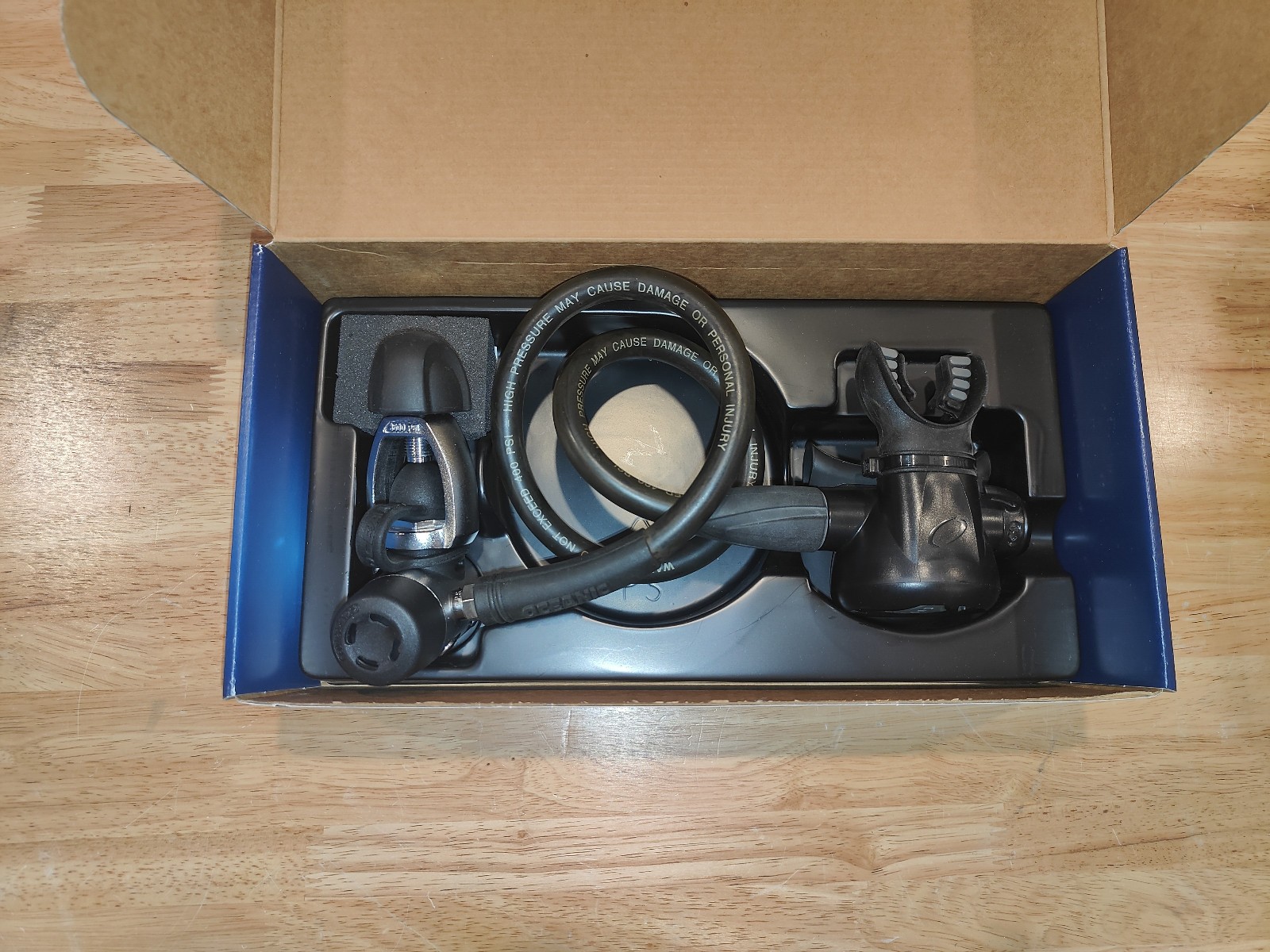

Photos from current listings. Actual item, color, and included accessories may vary.
Scuba Diving Regulator Set Buying Guide
A scuba diving regulator set is a life-support system that reduces high-pressure tank air to breathable pressure via a first stage, second stage, and often an octopus and gauge. The key trade-off is between balanced-piston or diaphragm first stages and unbalanced designs: balanced/diaphragm regulators hold consistent breathing effort at depth and resist cold-water freezing, while unbalanced piston models are simpler but demand more inhalation effort as tank pressure drops. Buy a sealed, balanced, or over-balanced diaphragm set for cold or deep diving; choose a balanced piston set for warm-water recreational use only if it carries a reputable service network.


At a glance
- Category
- BCD & Dive Regulators
- Data updated
- Nov 18, 2026
Current offers
Highlights
- First-stage architecture: balanced piston vs balanced diaphragm vs unbalanced piston, with sealed diaphragm and environmental sealing critical for water below 10°C (50°F).
- Second-stage breathing effort is measured in cm H2O at 0.5 J breathing rate; a high-performance set stays under ~1.0 J/L work of breathing at depth versus entry-level sets that rise noticeably.
- Hose and port standard: most first stages use 3/8-24 UNF threaded ports with 9/16-18 UNF hose nuts; DIN valve fittings (300 bar) outperform yoke (232 bar) for high-pressure and travel compatibility.
- Service interval and kit availability: reputable brands specify annual or 2-year service with parts kits; a set without a documented service chain is a durability compromise regardless of breathing specs.
Best use cases
- Best fit: warm-water recreational divers logging 20–40 m dives should pick a balanced piston or balanced diaphragm set with a standard yoke first stage, octopus, and analog SPG; skip unbalanced piston budget sets if you plan repeated deep profiles.
- Best fit: cold-water or temperate divers (water under 10°C/50°F, including Great Lakes and Pacific Northwest) need a sealed balanced diaphragm first stage rated for cold water and a second stage with heat exchanger; skip unsealed piston first stages.
- Best fit: travel divers should choose a compact DIN first stage with a yoke adapter and a lightweight second stage under ~200 g; skip full-size environmental-sealed piston sets that add bulk and weight in a carry-on.
- Wrong fit: technical or sidemount divers should skip single-hose recreational sets entirely and buy a dedicated doubles/sidemount regulator configuration with a 5th low-pressure port and DIN fittings.
Buying tips
- Match the first stage to your valve: a yoke (A-clamp) fits 200/232 bar tanks common in the Americas and Caribbean, while a DIN fitting (G 5/8) handles 300 bar tanks and is standard in Europe; buy a convertible first stage or the correct fitting, not an adapter-only workaround.
- For cold water, require an environmental seal or a diaphragm first stage explicitly rated for water below 10°C; a piston first stage without a seal can free-flow or ice up.
- Count low-pressure ports: a recreational set needs at least 4 LP ports (primary second stage, octopus, BCD inflator, drysuit or spare); technical setups need 5 or more plus two HP ports for a backup gauge or transmitter.
- Check service-kit availability and service interval before buying: brands with a published annual service schedule and widely stocked kits (e.g., annual service with a parts kit) are the durable choice; no-name sets with no parts distribution are disposable.
Specs
| First Stage Type | Balanced piston / diaphragm / unbalanced |
|---|---|
| Cold Water Rating | Sealed, rated below 10°C (50°F) |
| Valve Connection | Yoke 232 bar / DIN 300 bar |
| LP Ports | 4+ recreational / 5+ technical |
Related searches
What to check before buying
- Confirm your tank valve type and pressure rating (yoke 232 bar vs DIN 300 bar) and whether the first stage ships with the matching fitting or a convertible DIN/yoke design.
- Measure your BCD inflator hose connection: most use a standard quick-disconnect (Sea-Tec style) on a 3/8-24 UNF low-pressure port; confirm the set's inflator hose matches your BCD.
- Verify local service support: a certified technician or brand-authorized service center within reasonable distance must stock the specific first- and second-stage service kits.
- Check the set includes a backup second stage (octopus) and a submersible pressure gauge or air-integrated computer transmitter, plus a mouthpiece and hose length suited to your body size and diving position.
FAQ
Data sources: eBay / Amazon listings and product attribute feeds Data updated Nov 18, 2026.
Some links on this page are affiliate links. If you buy after clicking one, we may earn a commission at no extra cost to you. This does not change which products appear here or their order. Affiliate disclosure.