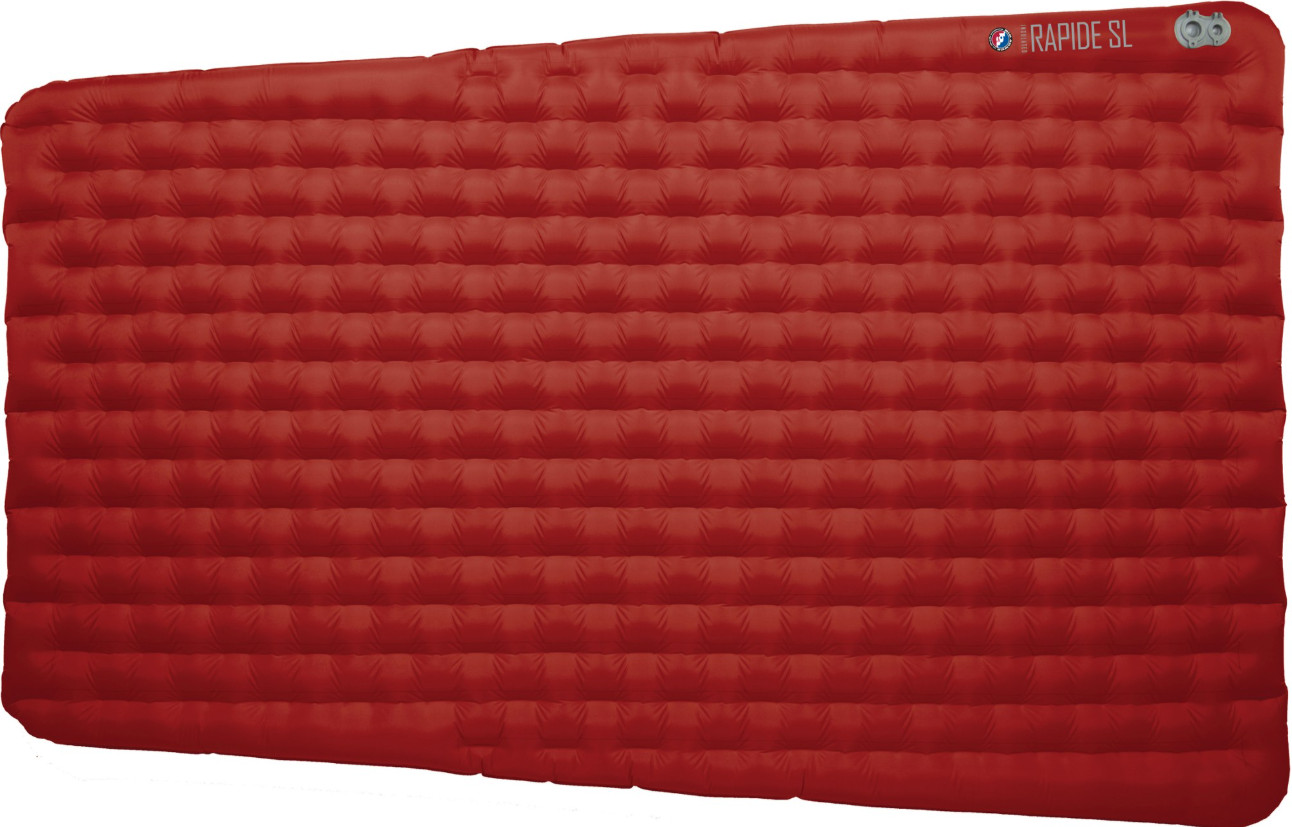

Photos from current listings. Actual item, color, and included accessories may vary.
Big Agne Sleeping Pad Buying Guide
Big Agnes sleeping pads are air-sprung backpacking and camping mattresses defined by their insulated air-core construction and integrated pad/bag attachment systems. The primary trade-off is weight and packed size versus warmth and puncture resistance, with three core architectures: ultralight uninsulated air pads, insulated air pads with reflective or synthetic fill, and hybrid self-inflating foam pads. Choose an insulated air-core model rated for your expected ground temperature; skip uninsulated ultralight pads for three-season or cold-sleeping use.


At a glance
- Category
- Sleeping Bags, Pads & Cots
- Data updated
- Nov 16, 2026
Current offers
Highlights
- Insulation tiers: uninsulated air pads suit summer only; reflective-film pads like the Rapide SL Insulated target three-season use; synthetic-fill pads add warmth at a weight penalty.
- Pad-bag integration: Big Agnes pads with a built-in sleeve or attachment system pair with Big Agnes bags to prevent roll-off; standard pads work with any bag.
- Valve architecture: two-valve inflate/deflate systems speed setup and allow fine pressure tuning; single-valve pads are simpler but slower to deflate fully.
- R-value drives warmth: 1-2 for summer, 3-4 for three-season, 5+ for winter or cold sleepers; match R-value to ground temperature, not air temperature.
Best use cases
- Backpacking three-season: pick an insulated air pad in the 3-4 R-value range with a packed weight under about 1.5 lb and a stuff sack smaller than a 1L bottle.
- Car camping and basecamp: choose a thicker, wider insulated pad or a self-inflating hybrid for comfort; skip ultralight 1-inch-thick pads that bottom out.
- Winter and cold sleepers: select a pad with R-value 5 or higher and pair it with a closed-cell foam pad underneath for added insulation and puncture protection.
- Big Agnes bag owners: choose a pad with the brand's integrated sleeve or attachment system to eliminate roll-off; skip if you use another brand's bag.
Buying tips
- Match R-value to ground temperature: R-1 to R-2 for warm summer, R-3 to R-4 for three-season, R-5+ for snow or cold sleepers.
- Size the pad to your body and tent: regular is about 20 in wide by 72 in long; large/wide is about 25 in wide by 78 in long; verify tent floor fit before choosing wide.
- Check packed volume against your pack: ultralight pads pack to about 1L or less; thicker insulated pads pack to 2-4L and may need external strapping.
- Inspect valve type and pump compatibility: two-valve pads inflate faster with a pump sack; confirm the pad includes or accepts a pump sack to avoid lung inflation.
Specs
| Insulation Type | Uninsulated / Reflective / Synthetic fill |
|---|---|
| R-Value Range | 1-2 summer, 3-4 three-season, 5+ winter |
| Pad Width | Regular ~20 in / Wide ~25 in |
| Valve System | Single vs dual inflate/deflate |
Related searches
What to check before buying
- Measure your tent floor and sleeping position: a wide pad needs about 25 in of floor width per sleeper; confirm tent dimensions before selecting large/wide.
- Confirm your sleeping bag attachment: Big Agnes pads with integrated sleeves require a compatible Big Agnes bag; standard pads work with any bag.
- Check your expected ground temperature and moisture: add 1 R-value for cold sleepers or damp ground; pair with a foam pad for winter.
- Verify valve and pump compatibility: ensure the pad's valve accepts your pump sack or that the pad includes one; two-valve systems need the matching pump.
FAQ
Data sources: eBay / Amazon listings and product attribute feeds Data updated Nov 16, 2026.
Some links on this page are affiliate links. If you buy after clicking one, we may earn a commission at no extra cost to you. This does not change which products appear here or their order. Affiliate disclosure.