Photos from current listings. Actual item, color, and included accessories may vary.
Cot Buying Guide
A camping cot is a portable off-ground sleep platform defined by frame architecture and fabric tension. The core trade-off is packed weight versus load capacity and stability: aluminum alloy cots save carry weight but demand tighter tolerances, while steel frames add durability at a weight penalty. Buy aluminum for backpacking and steel for car camping or base camp; skip any cot whose frame alloy and fabric denier are unspecified.

At a glance
- Category
- Sleeping Bags, Pads & Cots
- Data updated
- Nov 16, 2026
Current offers
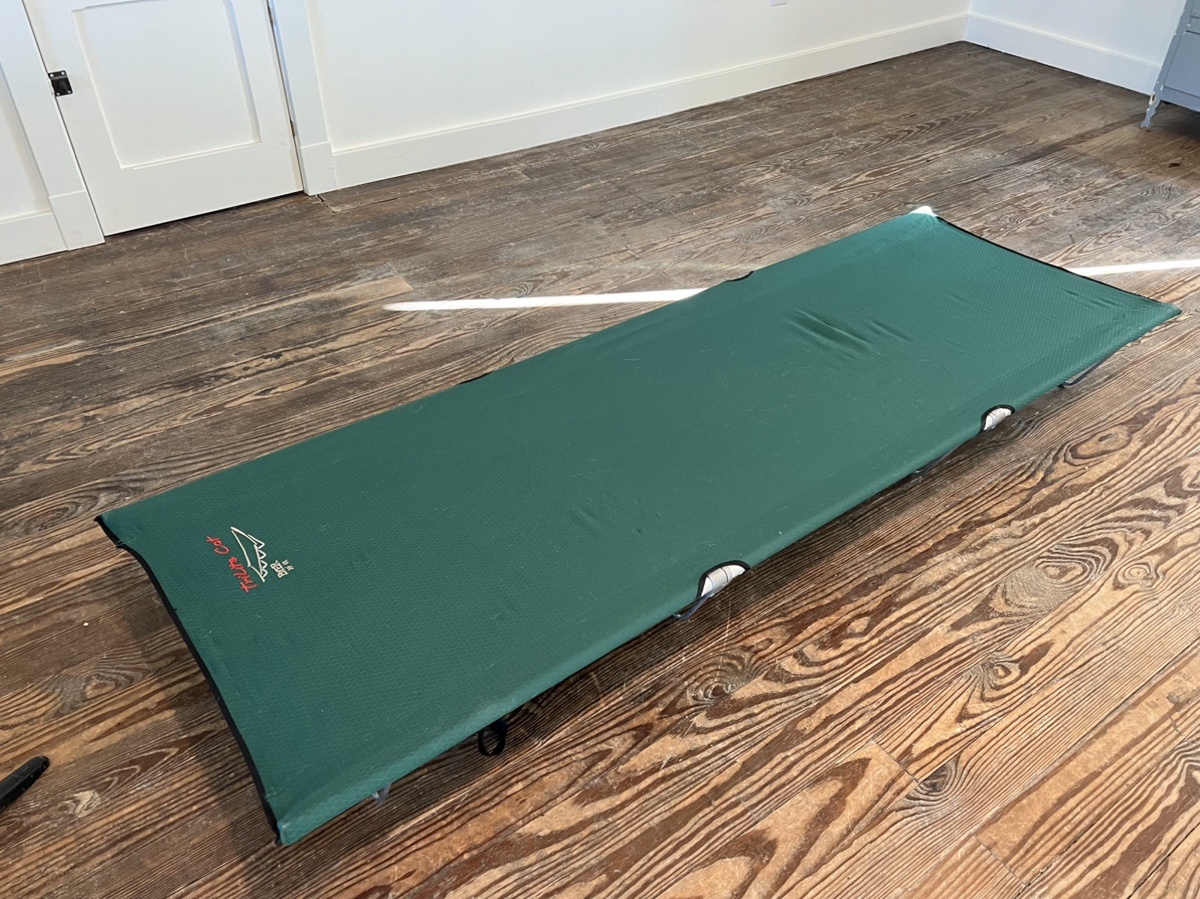 Byer of Maine TriLite Camping and Hiking Cot$42.00
 View on eBay
 Portable Folding Adjustable Sun Beach Lounger / Camping Cot - Blue and White$50.99
 View on Mallflare
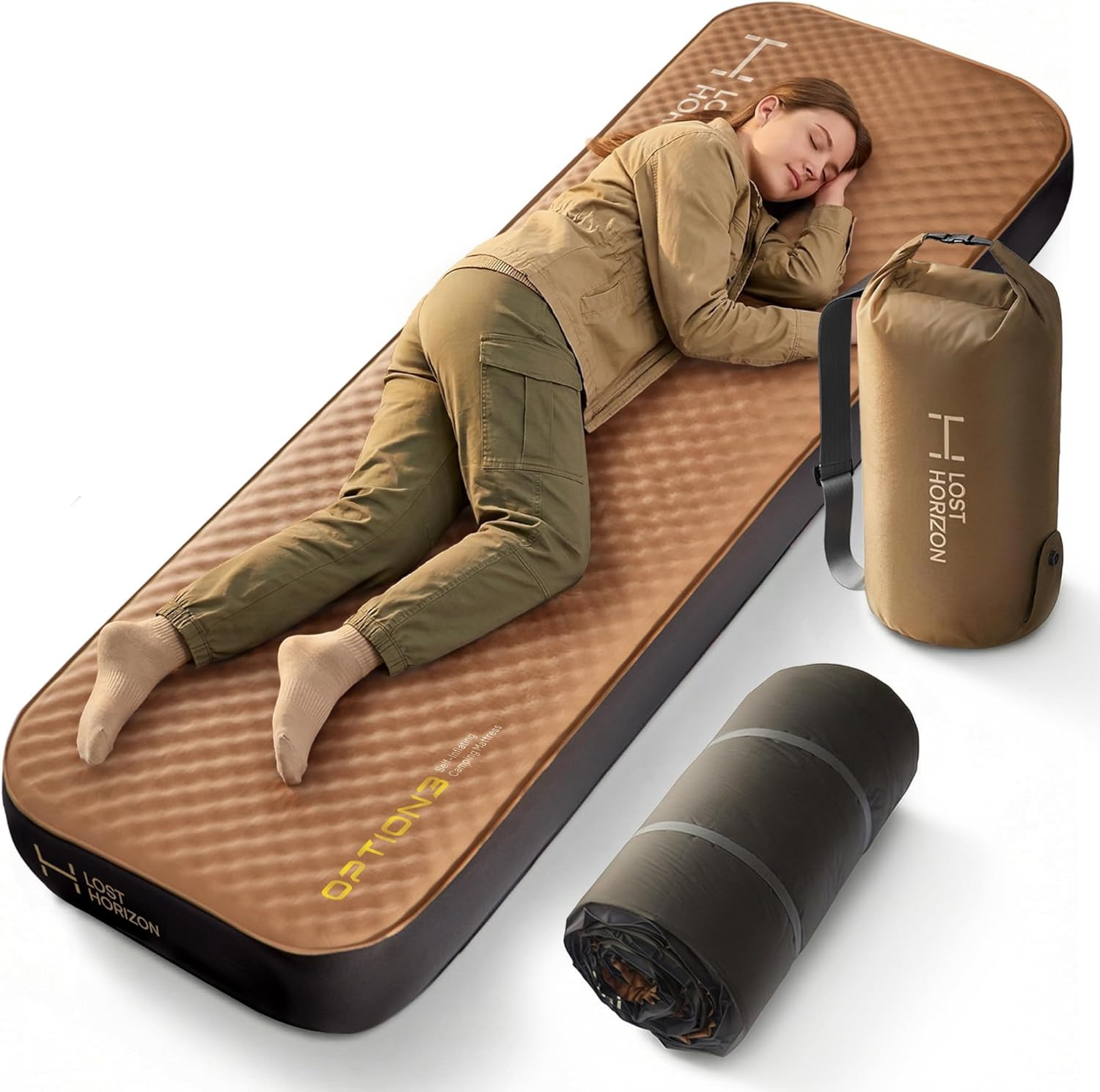 Option3 Self-Inflating Foam Camping Mattress, Cot, 4.5" | Air & Foam Comfort, Ad$171.32View on eBay
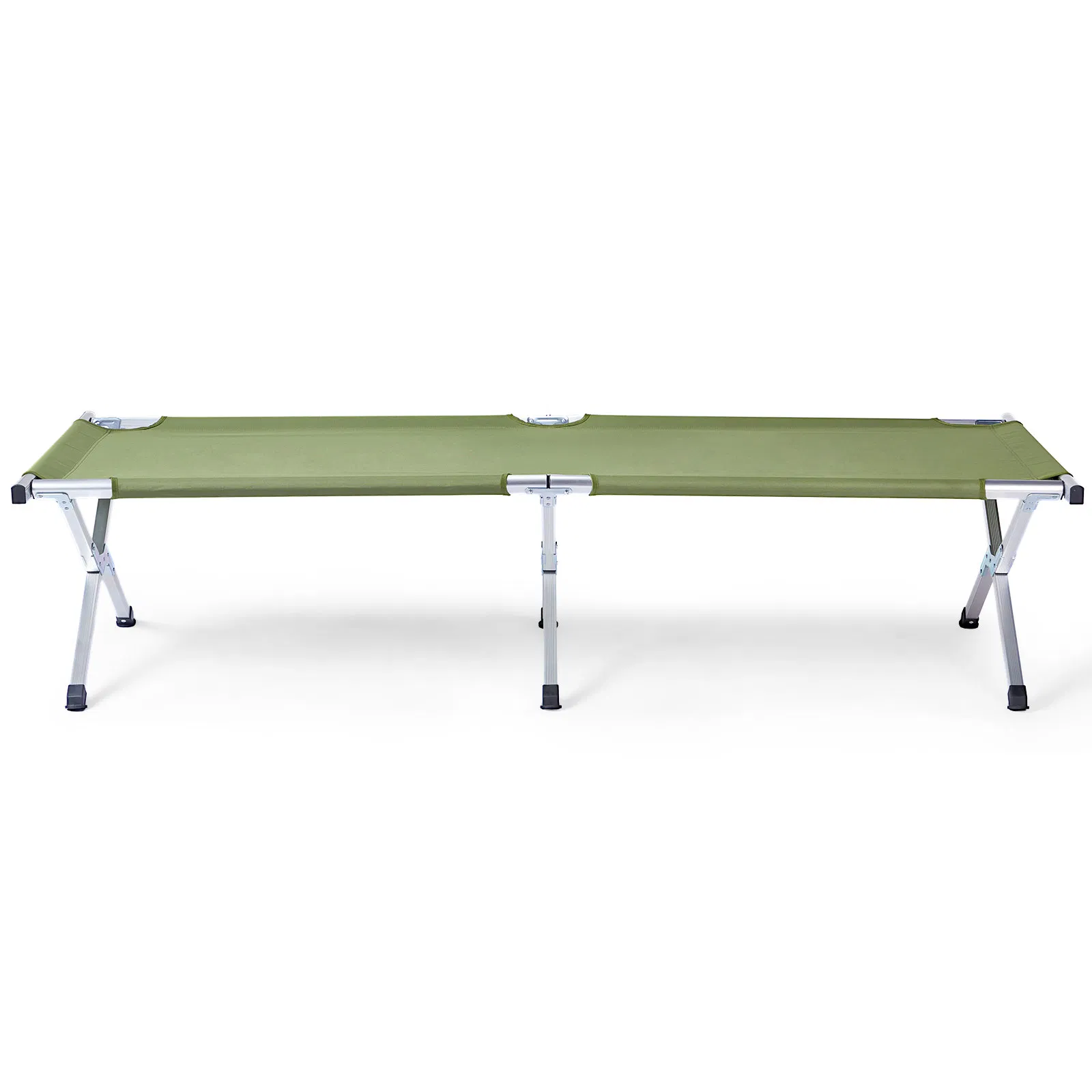 [Old Code: 27860141]RHB-03A Portable Folding Camping Cot with Carrying Bag Army Green$54.99View on Mallflare
- Option3 Self-Inflating Foam Camping Mattress, Cot, 4.5" | Air & Foam Comfort, Ad$205.95View on eBay
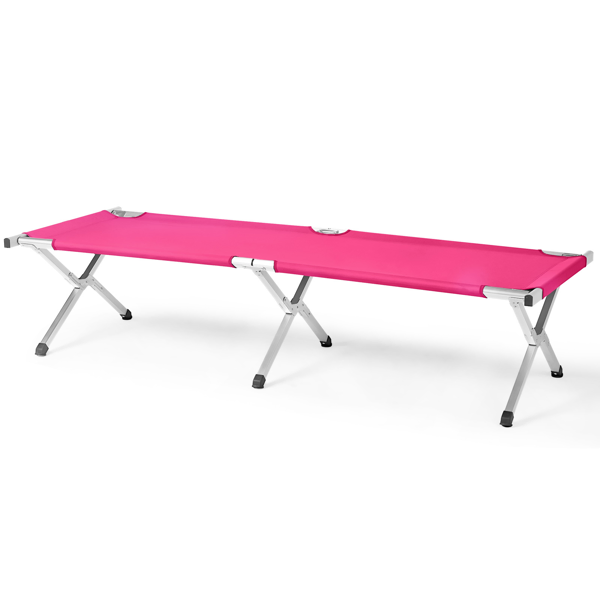 Portable Folding Camping Cot With Carrying Bag Army Pink$59.99View on Mallflare
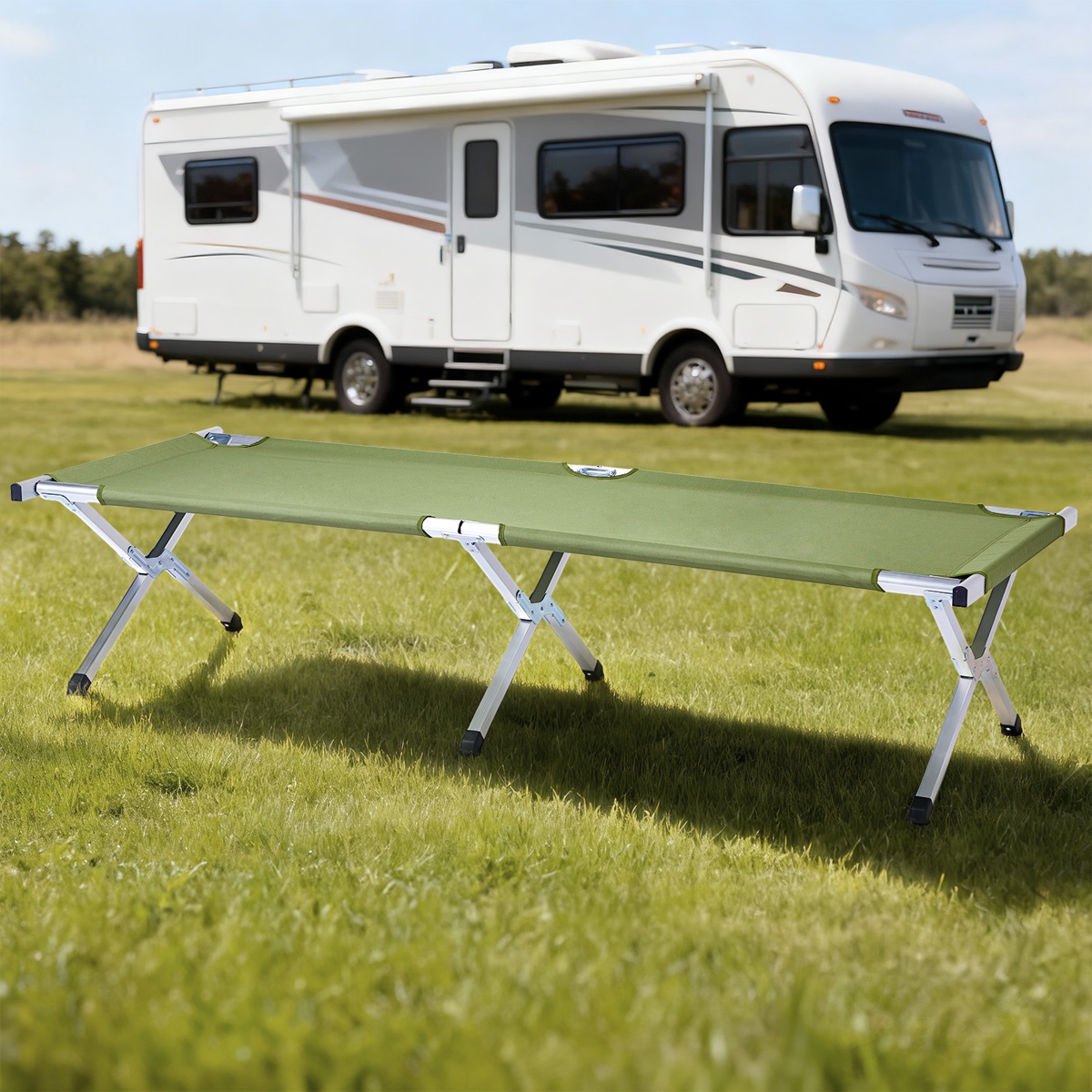 Same Code-27860141 RHB-03A Portable Folding Camping Cot With Carrying Bag Army Green$76.99View on Mallflare
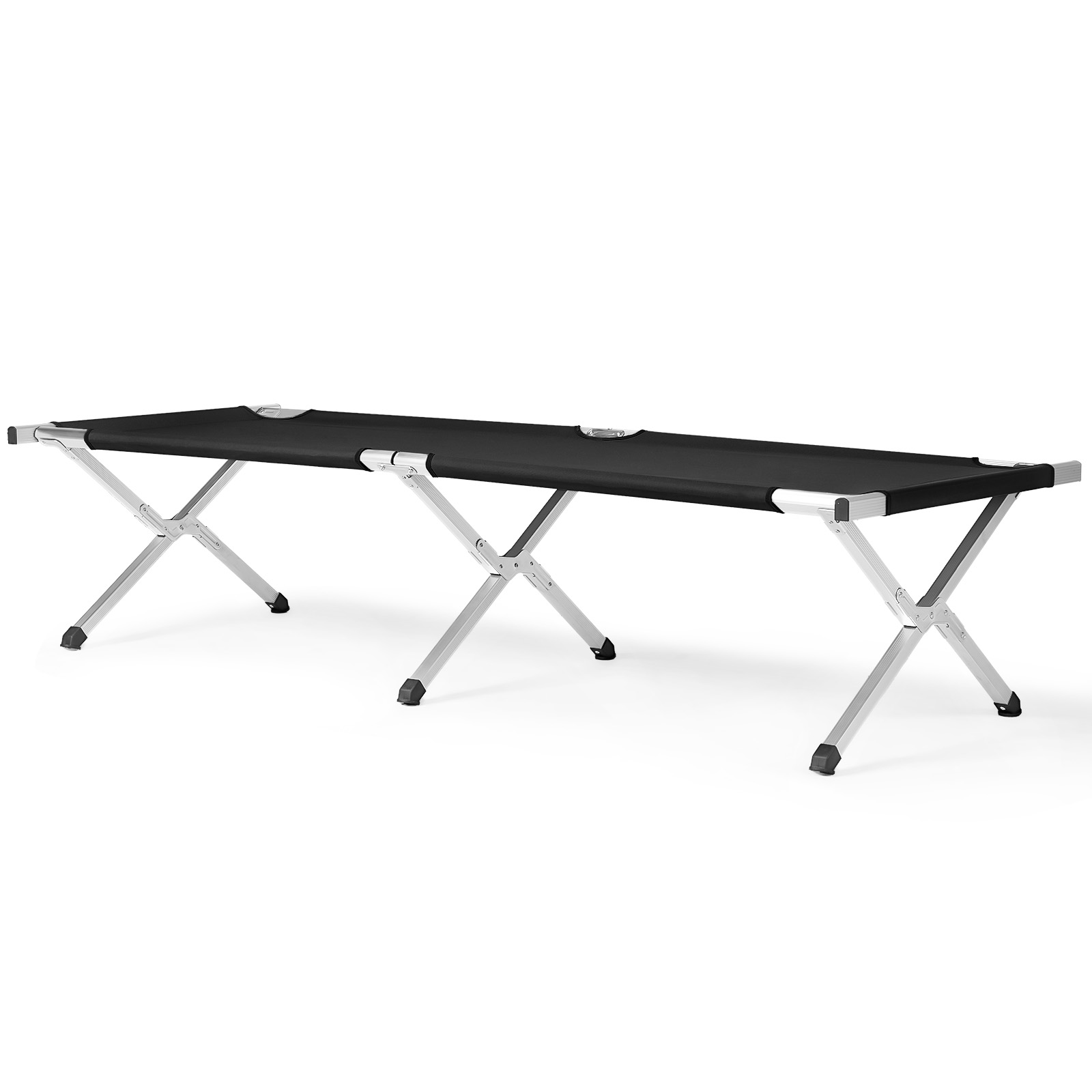 Portable Folding Camping Cot With Carrying Bag Army Black$76.99View on Mallflare
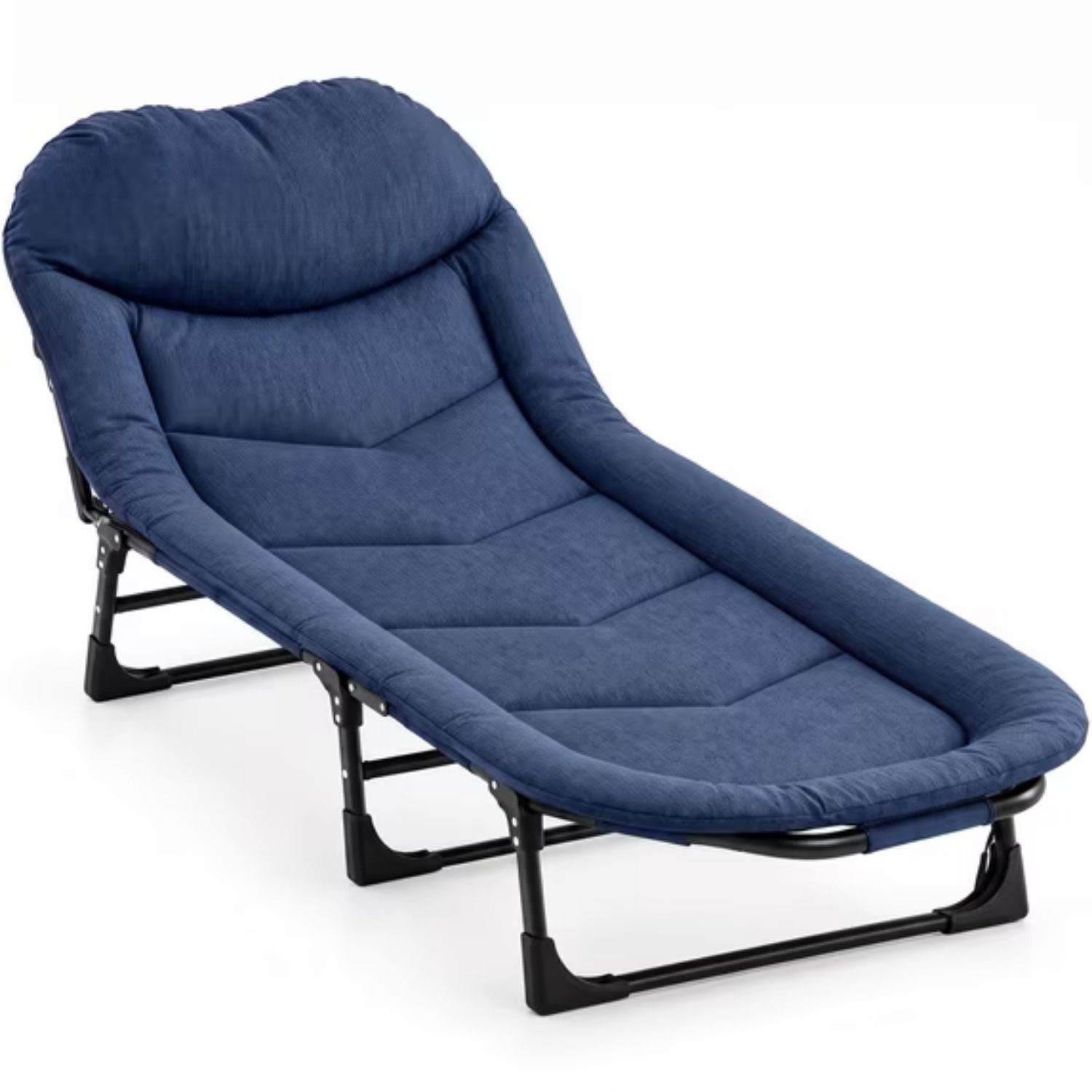 Folding Camping Recliner, 3-in-1 Heavy Duty Portable Sleeping Cot For Travel And Indoor$77.99View on Mallflare
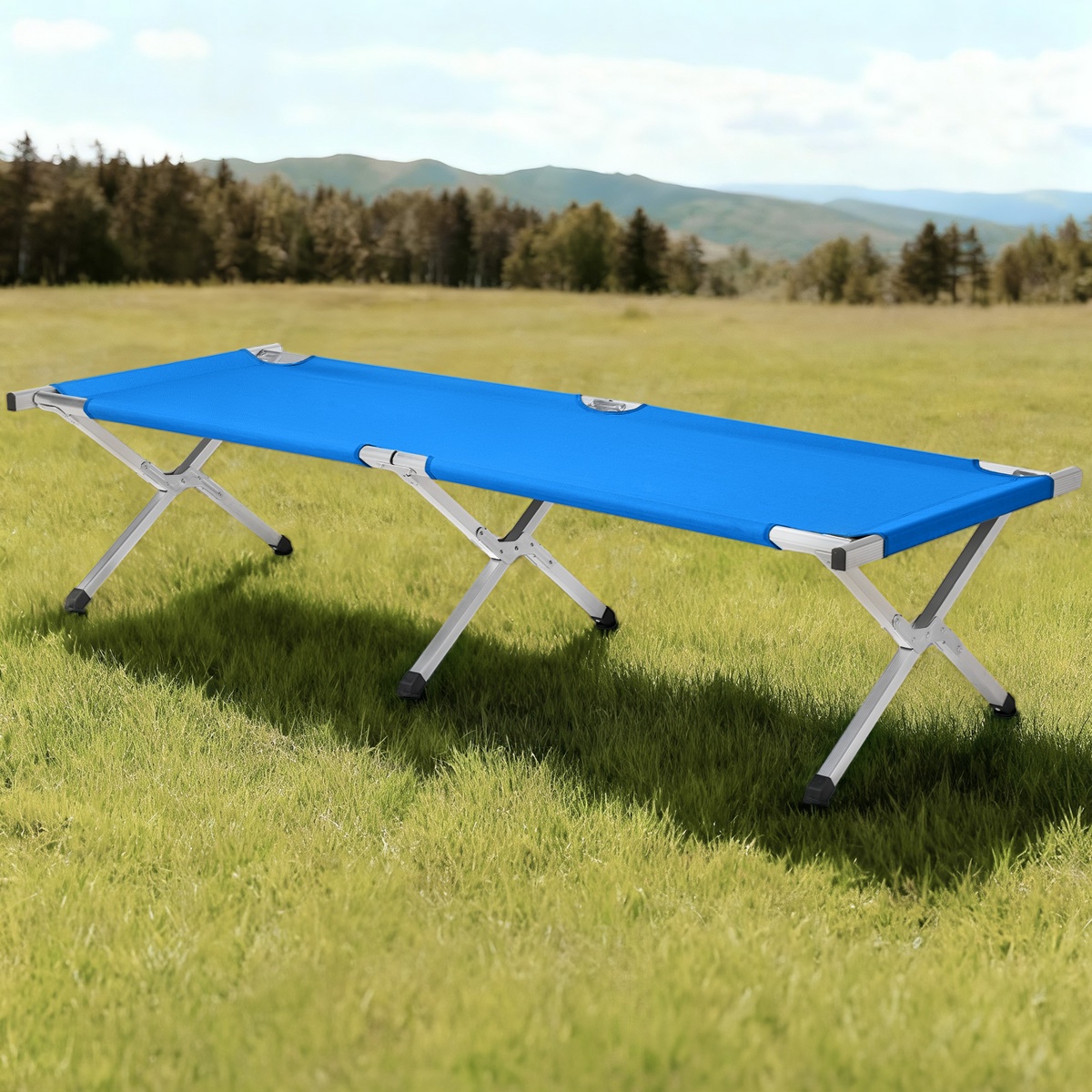 Portable Folding Camping Cot With Carrying Bag Army Blue$78.99View on Mallflare
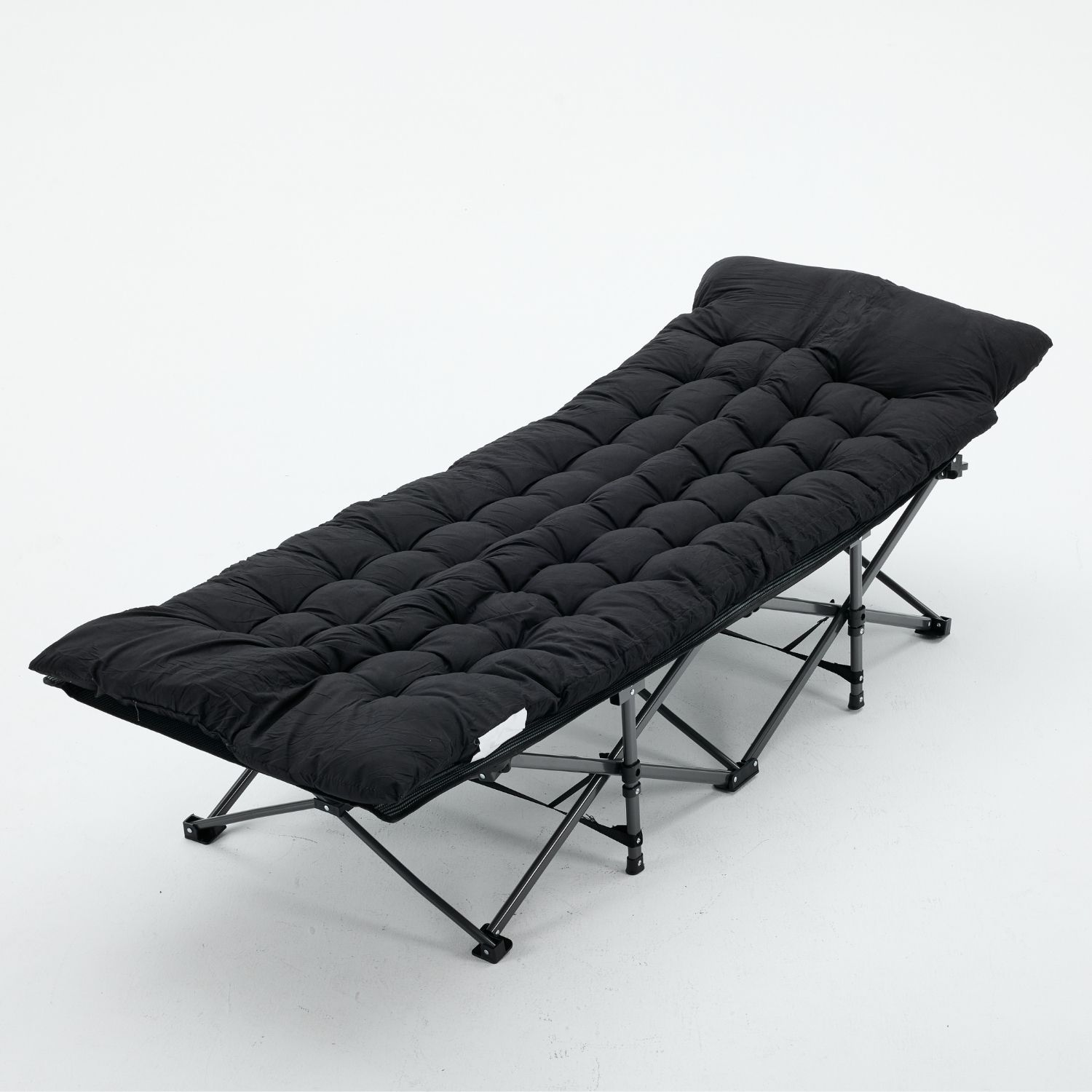 Cushioned Camping Bed, Comfortable Portable Cot For Travel And Indoor Use$80.99View on Mallflare
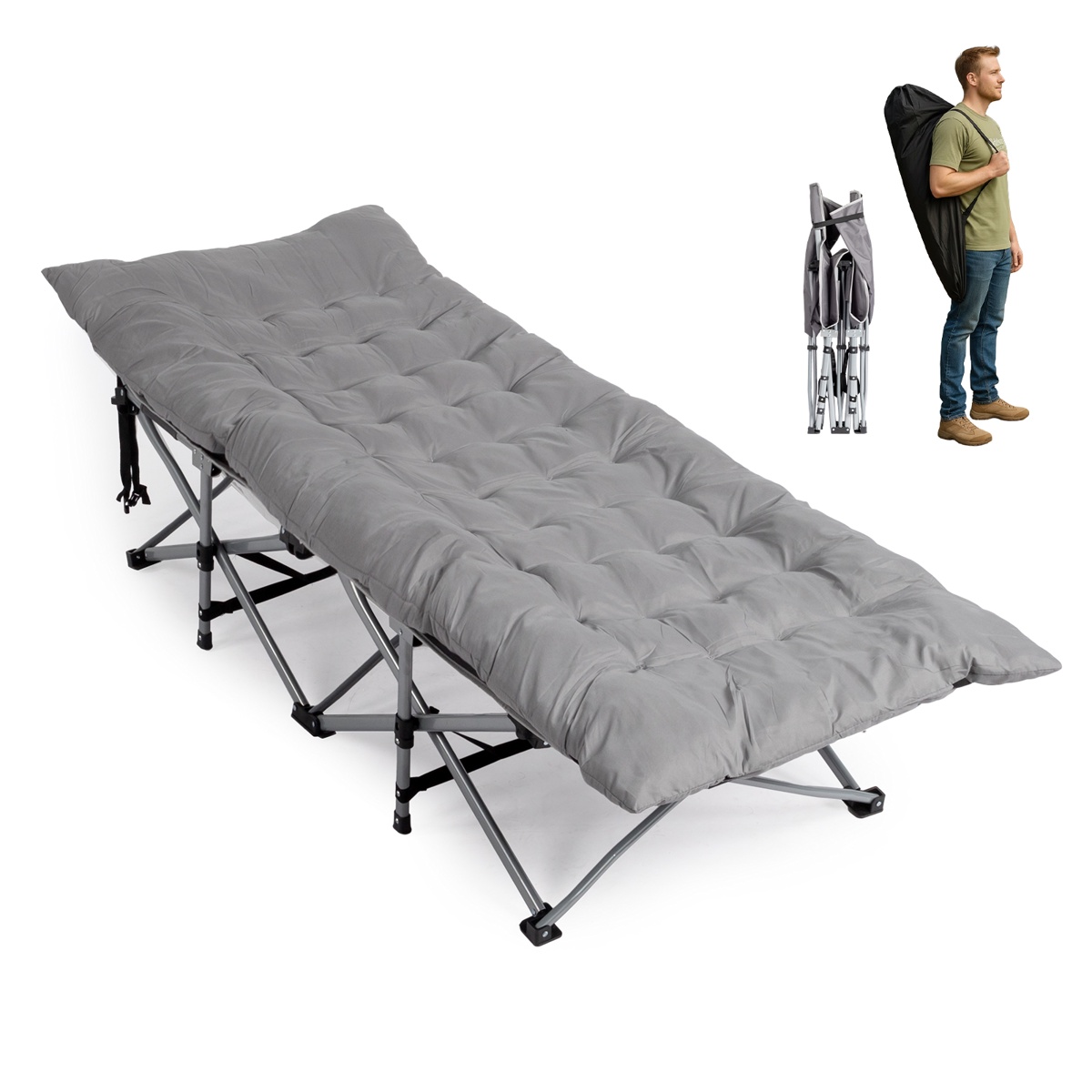 Folding Camping Cot Bed with Soft Pad, Portable Outdoor Cot, Adults Sleeping Bed for Home Office Nap Beach Travel, Gray$84.99View on Mallflare
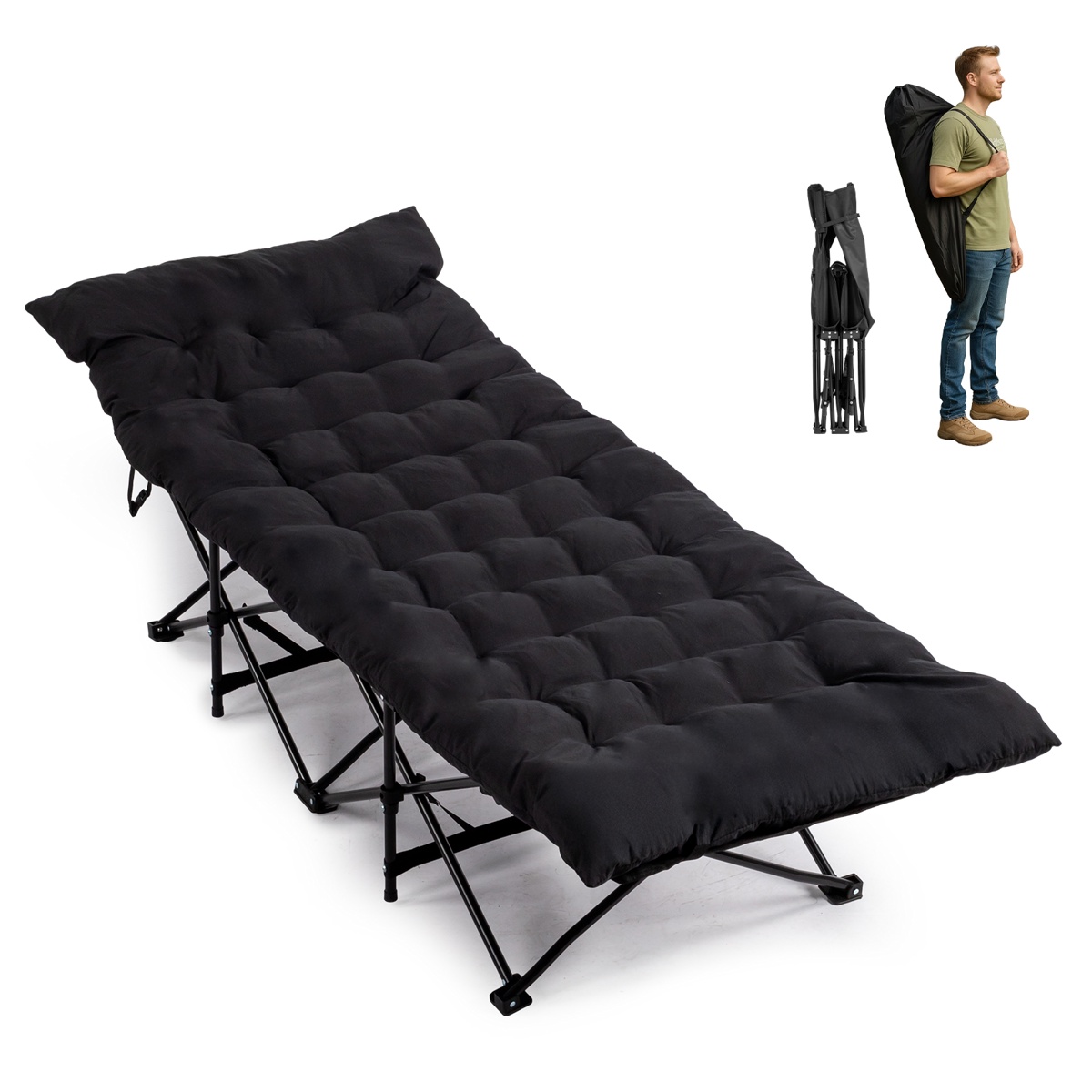 【Same Code:17997929】Folding Camping Cot Bed with Soft Pad, Portable Outdoor Cot, Adults Sleeping Bed for Home Office Nap Beach Travel, Black$84.99View on Mallflare
Highlights
- Frame material splits into 7075/6061 aluminum alloy (lighter, 2-4 kg class) and powder-coated steel (heavier, 5-9 kg class); aluminum resists corrosion but dents, steel handles abuse but rusts if scratched.
- Fabric grade determines durability: 600D polyester or 210D ripstop nylon Oxford weaves resist abrasion and sag; lower-denier or non-specified fabric stretches and tears at stress points within seasons.
- Cot width drives comfort: standard 26-28 in fits one adult; 30-33 in wide models reduce pressure points but add bulk and require larger tents or open shelters.
- Leg design matters: cross-leg scissor frames pack small but wobble; end-bar and 4-leg X-frames with wide feet distribute load better on soft ground and resist tipping.
Best use cases
- Car camping and base camp: pick a steel-frame cot with 600D fabric and 30+ in width for maximum stability and comfort; skip ultralight aluminum unless you are carrying it more than a few hundred yards.
- Backpacking and bike touring: choose an aluminum alloy cot under 3 kg packed with a stuff sack and quick-clip assembly; skip steel frames and wide cots that exceed pack volume.
- Indoor guest and office nap use: select a folding cot with a soft padded top and locking legs; skip bare fabric cots that lack mattress padding and squeak on hard floors.
Buying tips
- Match cot length to user height plus 4-6 in: a 6 ft sleeper needs a 75 in cot; standard 72-75 in cots fit most adults, while 80+ in models suit taller users.
- Confirm load rating from frame alloy and leg count: steel 4-leg cots typically support 300-400 lb; aluminum cross-leg cots often rate 250-300 lb, so heavy users should choose steel.
- Check packed dimensions against tent floor: a 78 x 30 in cot needs a 3-person tent or larger; cross-leg cots pack to roughly 40 x 8 in and fit smaller shelters.
- Prefer cots with replaceable end bars, reinforced corner gussets, and a carry bag included; non-replaceable riveted frames become unusable after one bent leg.
Specs
| Frame Material | Aluminum alloy vs powder-coated steel |
|---|---|
| Fabric Grade | 600D Oxford polyester / 210D ripstop nylon |
| Cot Width | Standard 26-28 in / Wide 30-33 in |
| Load Capacity | 250-300 lb aluminum / 300-400 lb steel |
Related searches
What to check before buying
- Measure your tent or shelter floor: cot length plus 6 in clearance on all sides prevents fabric contact and condensation.
- Check user weight against the frame rating: add 20% margin for gear and movement; steel for 250 lb+, aluminum only if rated accordingly.
- Verify ground conditions: use wide-foot or sand-foot accessories on soft soil, and a footprint or tarp under steel legs on abrasive rock.
- Confirm assembly hardware: pin-and-sleeve or quick-clip frames assemble without tools; avoid bolt-together cots for frequent setup.
FAQ
Data sources: eBay / Amazon listings and product attribute feeds Data updated Nov 16, 2026.
Some links on this page are affiliate links. If you buy after clicking one, we may earn a commission at no extra cost to you. This does not change which products appear here or their order. Affiliate disclosure.