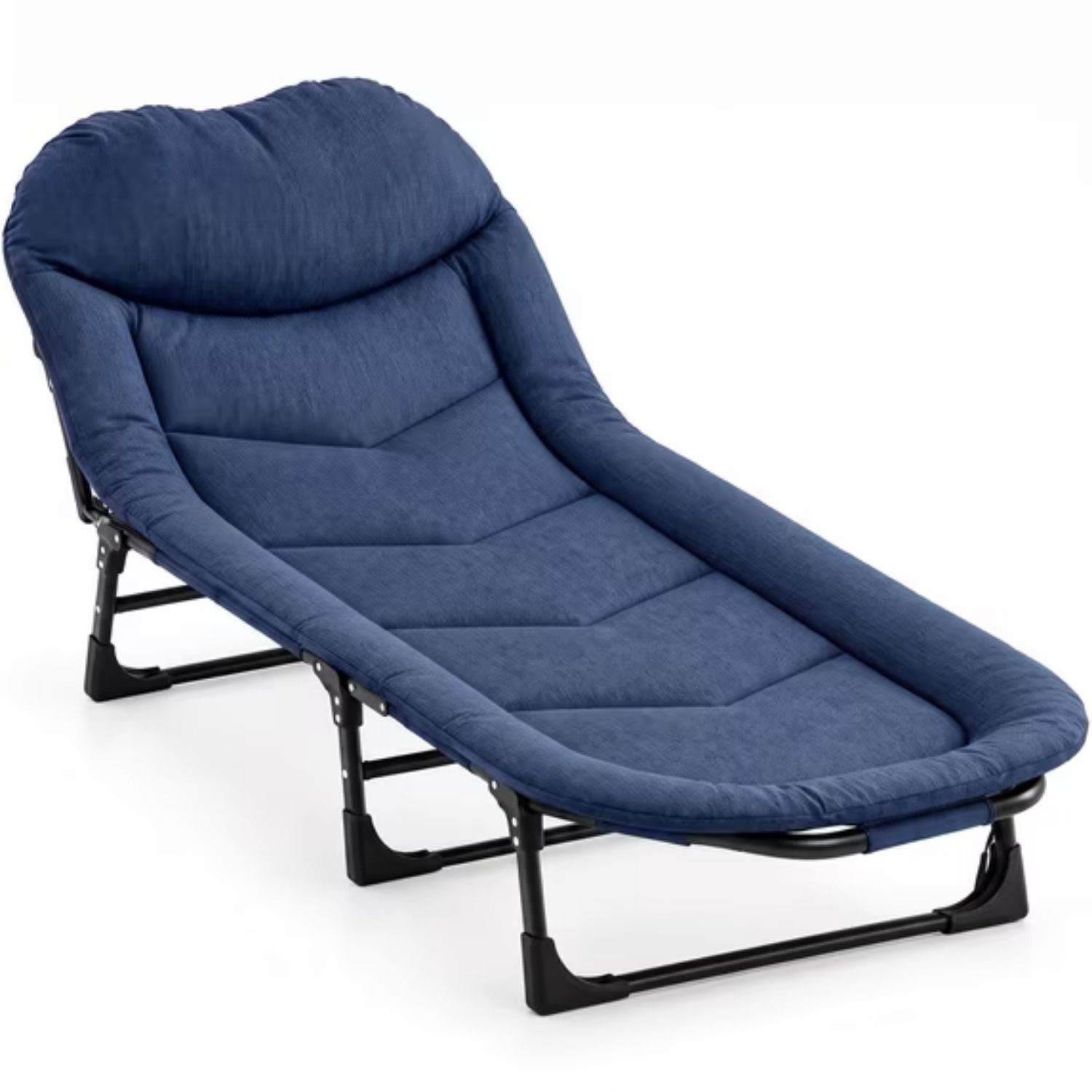

Photos from current listings. Actual item, color, and included accessories may vary.
Heavy Duty Camping Cot Buying Guide
A heavy-duty camping cot is a load-bearing sleep platform built from a metal frame (steel or aluminum) and taut fabric, where the primary trade-off is weight capacity and frame rigidity versus packed weight and bulk. Durable cots use thick-wall steel or aircraft-grade aluminum with rated capacities of 300–600 lb and wide, stable feet; compromises skimp on tube wall thickness, use thin 600D fabric, and wobble under load. The decision rule: buy a cot rated at least 1.5× your body weight, with a frame geometry that matches your sleeping style and tent footprint.


At a glance
- Category
- Sleeping Bags, Pads & Cots
- Data updated
- Nov 17, 2026
Current offers
Highlights
- Frame material: steel cots handle 400–600 lb but weigh 20–30 lb; aluminum cots cut weight to 8–15 lb while holding 250–350 lb.
- Fabric grade: 600D oxford polyester with PU coating resists abrasion and moisture; 300D or non-woven fabric tears at seams under heavy point loads.
- Leg geometry: 4-leg end-bar designs concentrate load and can bend; 6–8-leg cots with cross-braces distribute weight and resist rocking on uneven ground.
- Deployment: folding 'X' frames and roll-up styles differ in packed length (28–45 in) and setup time; cot height (7–18 in) affects under-bed storage and tent clearance.
Best use cases
- Best fit: car camping or base camp with a large tent (≥6-person) — pick a steel 6-leg cot rated 400+ lb for two adults or a heavy sleeper.
- Best fit: backpacking or motorcycle touring — choose an aluminum 4-leg cot under 12 lb with a 250–300 lb rating and packed length ≤30 in.
- Wrong fit: ultralight thru-hiking — a cot is heavier and bulkier than an inflatable pad; use a closed-cell or air pad instead.
- Wrong fit: small 2-person tent — a standard 30×75 in cot plus frame feet consumes most floor space; measure interior width before buying.
Buying tips
- Capacity math: choose a cot rated ≥1.5× your weight; a 200 lb sleeper needs a 300 lb minimum, 400 lb for two people or gear.
- Measure tent floor: standard cot is ~30×75 in; allow 2–4 in per side for frame feet and clearance from tent walls.
- Check packed length against your vehicle or pack: roll-up cots pack to ~28–35 in, folding X-frames often 40–45 in.
- Match leg count to ground: 4-leg cots are lighter but tippy; 6–8 legs with wide feet are stable on soft or uneven soil.
Specs
| Frame Material | Steel (heavy) vs Aluminum (light) |
|---|---|
| Weight Capacity | 250–600 lb (pick ≥1.5× body weight) |
| Fabric Grade | 600D oxford PU-coated vs 300D |
| Leg Count | 4-leg light / 6–8-leg stable |
Related searches
What to check before buying
- Tent floor width and door height: confirm the cot's deployed footprint and height fit with room to enter and exit.
- Sleeping pad compatibility: cots are taut and cold underneath; plan a pad or insulated mat for temperatures below ~50°F.
- Body dimensions: cots are typically 75 in long; sleepers over 6 ft need a 78–82 in model or an oversized cot.
- Storage and transport: packed size and weight must fit your vehicle trunk or roof box and be liftable by one person.
FAQ
Data sources: eBay / Amazon listings and product attribute feeds Data updated Nov 17, 2026.
Some links on this page are affiliate links. If you buy after clicking one, we may earn a commission at no extra cost to you. This does not change which products appear here or their order. Affiliate disclosure.