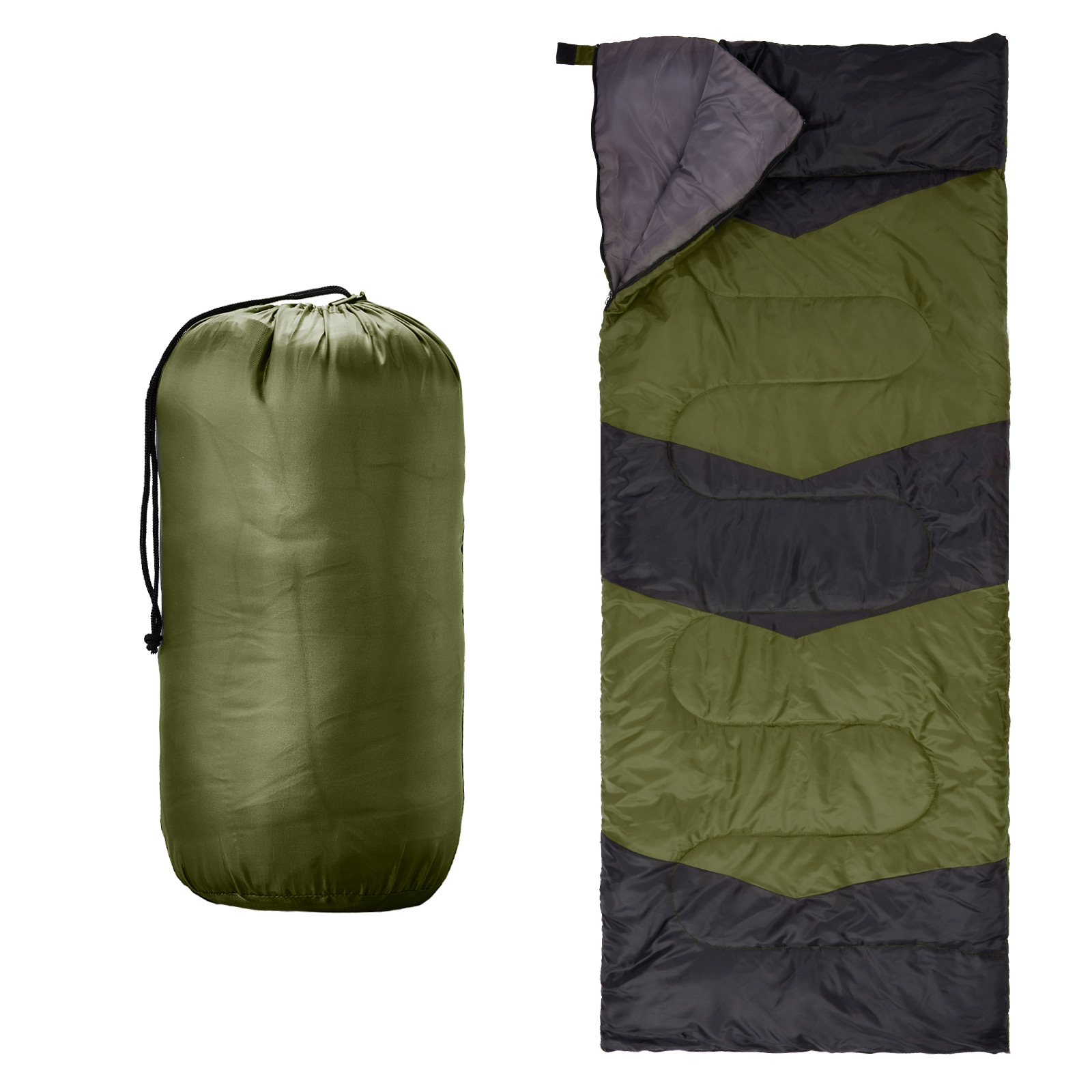

Photos from current listings. Actual item, color, and included accessories may vary.
Lightweight Sleeping Bag Buying Guide
A lightweight sleeping bag is a packable insulation system for backpacking and travel, where weight and packed volume trade directly against warmth and weather protection. The decisive divide is between certified down bags with an EN/ISO comfort rating and synthetic-fill or unrated envelope bags that save cost but gain bulk and lose warmth when damp. Buy a bag rated at least 10°F below your expected overnight low, or accept that you are buying a summer-only fair-weather bag.


At a glance
- Category
- Sleeping Bags, Pads & Cots
- Data updated
- Nov 16, 2026
Current offers
Highlights
- Fill power is the key down metric: 650-fill is the practical backpacking floor, 800-fill saves real weight and volume, and 900+ is a premium gram-counting choice.
- EN/ISO 23537 temperature ratings separate a bag's Comfort (survivable for most) from Lower Limit (survivable for a warm sleeper); budget bags often omit this testing entirely.
- Synthetic insulation (Clo Value or grams/m²) keeps loft when wet and suits humid climates, but packs roughly 30–50% bulkier than equivalent down.
- Envelope and rectangular bags trade thermal efficiency for room; mummy and tapered cuts shave weight and warm faster by reducing dead air space.
Best use cases
- Three-season backpacking in dry climates: choose a mummy or tapered bag with 800-fill down, an EN Comfort rating near your expected low, and a full-length draft tube.
- Humid or wet-weather trips: pick a synthetic-fill bag with a water-resistant shell rather than down, accepting extra packed size for reliable loft when damp.
- Car camping or warm-weather hostel travel: a rectangular or envelope synthetic bag is fine and comfortable — skip down premiums you will not need.
- Sub-freezing winter camping: skip 'lightweight' bags entirely and move to a dedicated winter bag with an EN Lower Limit well below the forecast low.
Buying tips
- Match the EN Comfort rating, not the marketing 'extreme' number, to your expected overnight low; a bag rated near the low leaves no margin for cold sleepers.
- Down bags need a dry sack and should never be stored compressed; synthetic bags tolerate stuff-sack storage better but lose loft over seasons.
- Check shell and lining fabric denier: 10–20D fabrics save weight but need care; 30D+ resists abrasion for rough ground and frequent use.
- Confirm the bag's packed size and weight against your pack volume — a 'lightweight' bag that fills half your pack defeats the purpose.
Specs
| Insulation Type | Down (fill power) vs Synthetic |
|---|---|
| Temp Rating Standard | EN/ISO 23537 Comfort / Lower Limit |
| Bag Shape | Mummy / Tapered / Rectangular |
| Shell Fabric | 10D–30D nylon / polyester |
Related searches
What to check before buying
- Measure your pad width and the bag's shoulder and hip girth; a bag too narrow compresses insulation and loses warmth.
- Confirm the temperature rating standard (EN/ISO 23537) is stated, and note whether it is Comfort or Lower Limit.
- Check the fill type and power (down fill power or synthetic grams/m²) and whether a water-resistant shell is included.
- Verify the included stuff sack size and whether a storage sack is provided for down bags.
FAQ
Data sources: eBay / Amazon listings and product attribute feeds Data updated Nov 16, 2026.
Some links on this page are affiliate links. If you buy after clicking one, we may earn a commission at no extra cost to you. This does not change which products appear here or their order. Affiliate disclosure.