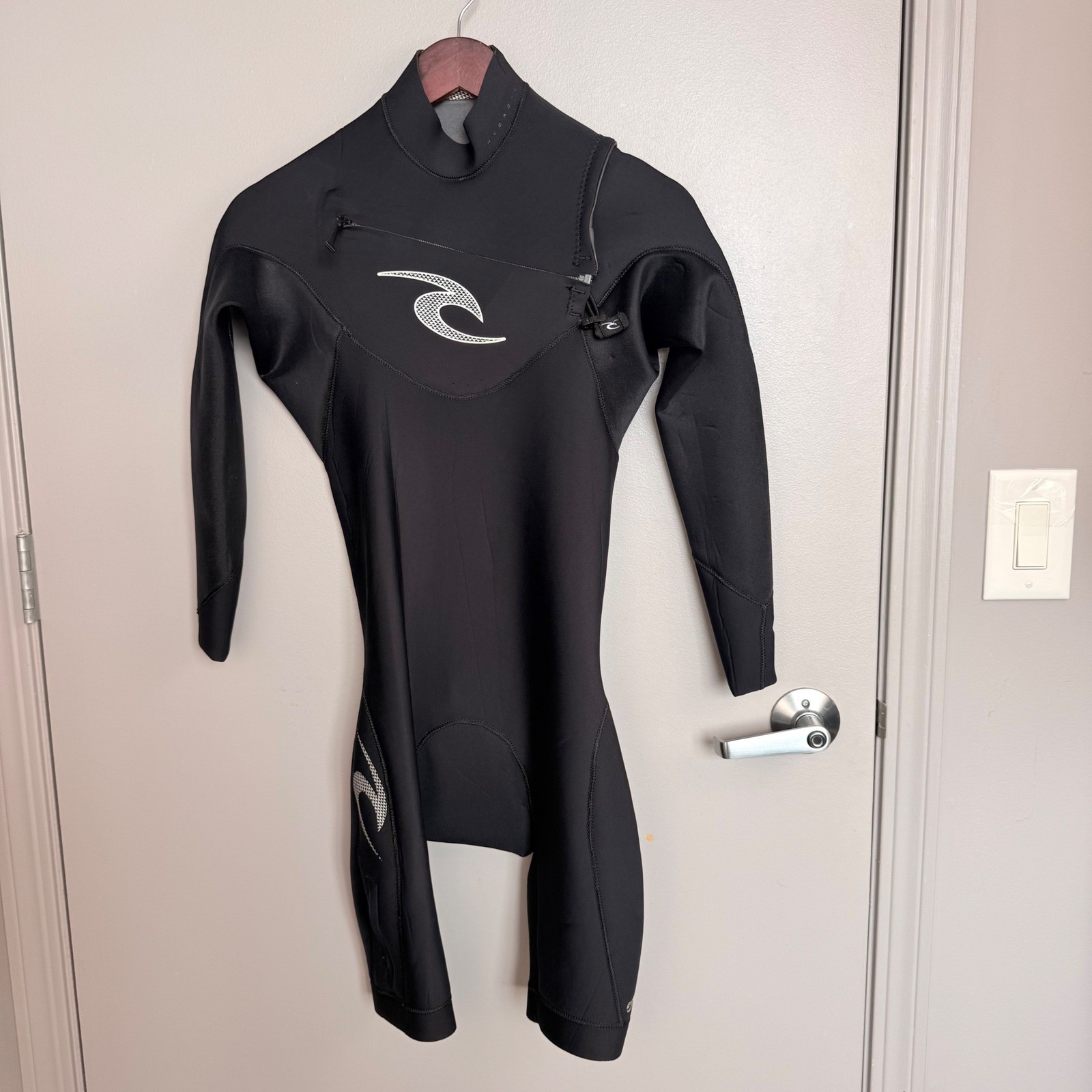

Photos from current listings. Actual item, color, and included accessories may vary.
Rip Curl Wetsuit Buying Guide
Rip Curl wetsuits span from entry-level back-zip steamers to high-end E-Bomb Pro+ E3 neoprene built for cold-water performance. The core trade-off is neoprene grade and seam architecture: cheaper back-zip suits use standard limestone or petroleum neoprene with glued blind seams, while premium chest-zip and zip-free models use E6/E7 or E-Bomb E3 neoprene with taped and liquid-sealed seams for stretch and warmth. The decision rule: buy a chest-zip or zip-free suit in E6/E7 or E-Bomb E3 for water below 60°F and daily surfing; choose a back-zip or shorty in standard neoprene only for warm water, travel, or occasional use.


At a glance
- Category
- Surf Wetsuits & Rash Guards
- Data updated
- Nov 16, 2026
Current offers
Highlights
- E-Bomb Pro+ E3 uses Rip Curl's E3 neoprene with a chest-zip entry, glued and blind-stitched seams with internal taping, and a lightweight thermal lining for 52-62°F water.
- Chest-zip and zip-free models reduce flushing and increase paddle flexibility versus back-zip suits, but demand precise torso and height sizing because entry is tighter.
- Seam construction tiers: flatlock (entry), glued blind-stitch (mid), and glued blind-stitch plus liquid seal or taping (premium) directly determine durability and cold-water leakage.
- Neoprene grades progress from standard E5/E6 to E7 and E-Bomb E3; higher grades deliver more stretch and lower weight, but cost more and require careful rinse care to avoid delamination.
Best use cases
- Best fit: cold-water daily surfing (water 52-62°F) — pick a chest-zip E-Bomb Pro+ E3 or E7 steamer with sealed seams and integrated hood compatibility.
- Best fit: warm-water travel or pool sessions (water 68°F+) — choose a Rip Curl shorty or spring suit in standard neoprene with flatlock seams; skip premium taped seams that add cost without benefit.
- Wrong fit: budget back-zip suit for 50°F winter sessions — back-zip entry flushes more water and flatlock seams leak; step up to a chest-zip sealed-seam model instead.
- Wrong fit: zip-free suit for a first-time buyer — zip-free entry is less forgiving on fit; start with a chest-zip or back-zip suit until you know your Rip Curl size.
Buying tips
- Size by height and chest, not weight alone: Rip Curl size charts key off height ranges and chest circumference; a suit that is too tall will gap at the lower back and flush.
- Match thickness to water temperature: 4/3mm for 52-62°F, 3/2mm for 62-68°F, 2mm shorty or top for 68°F+; overdressing causes overheating and underdressing causes cold shock.
- Prefer chest-zip or zip-free with taped or liquid-sealed seams for water below 60°F; back-zip with flatlock is acceptable only for 65°F+ or intermittent use.
- Inspect seam type before buying: glued blind-stitch alone is mid-tier; taped internal seams or liquid seal exterior marks the durable cold-water tier across Rip Curl lines.
Specs
| Entry Type | Chest-zip / Back-zip / Zip-free |
|---|---|
| Neoprene Grade | E3 / E5 / E6 / E7 by tier |
| Seam Construction | Flatlock to taped/liquid-sealed |
| Thickness Range | 2mm shorty to 5/4mm steamer |
Related searches
What to check before buying
- Measure height and chest circumference and compare against the Rip Curl size chart; chest-zip suits run snug, so size up only if between sizes.
- Confirm water temperature at your break to select 4/3mm, 3/2mm, or shorty thickness — the same model line varies by thickness tier.
- Check entry type compatibility with your flexibility and shoulder mobility: zip-free and chest-zip demand more range of motion than back-zip.
- Verify whether the suit includes or requires a separate hood, boots, and gloves for water below 55°F; steamers rarely include hoods.
FAQ
Data sources: eBay / Amazon listings and product attribute feeds Data updated Nov 16, 2026.
Some links on this page are affiliate links. If you buy after clicking one, we may earn a commission at no extra cost to you. This does not change which products appear here or their order. Affiliate disclosure.