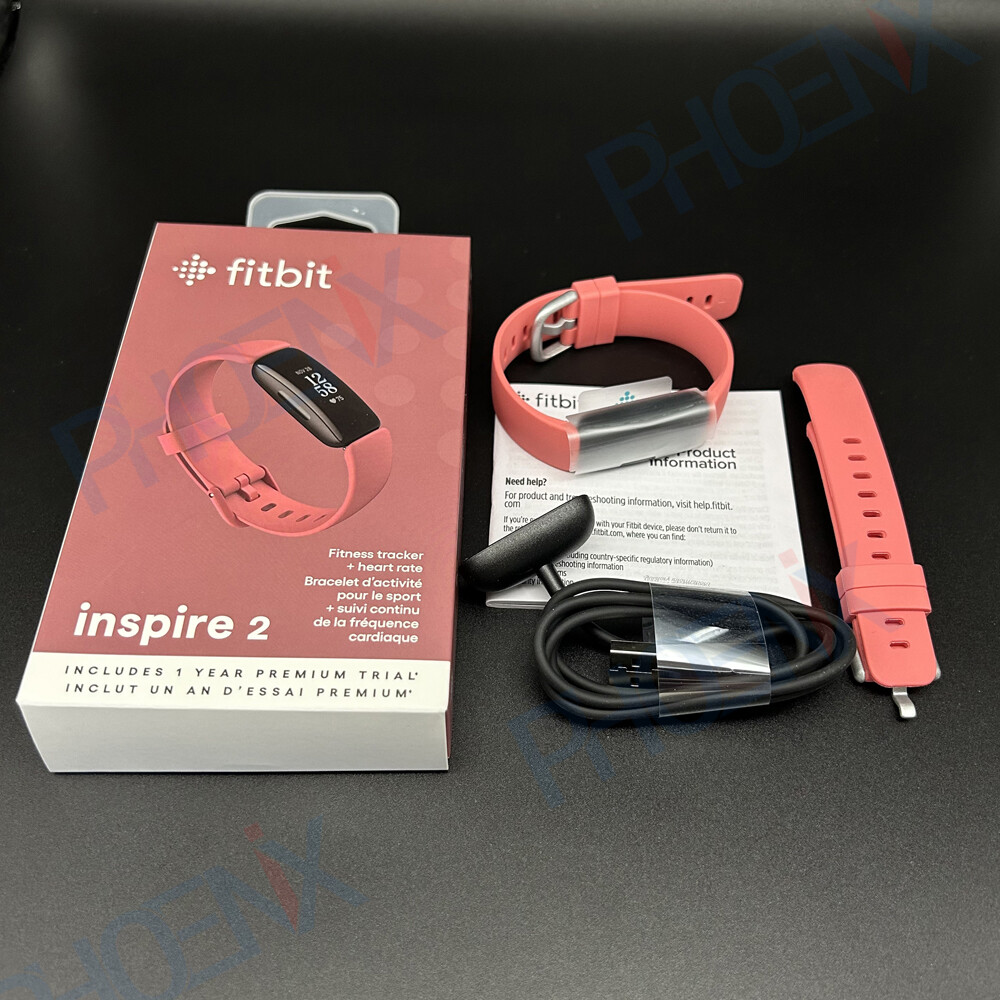

Photos from current listings. Actual item, color, and included accessories may vary.
Fitbit Buying Guide
Fitbit is a line of wrist-worn health and fitness trackers ranging from slim activity bands to full smartwatches, all built around continuous heart-rate monitoring and step/sleep tracking. The core trade-off is between a lightweight, week-long-battery band with a small screen versus a larger smartwatch with GPS, built-in music, and a 5-6 day battery. Durable picks use optical heart-rate sensors with cross-platform apps and 5ATM water resistance; compromises are older micro-USB charging models and discontinued generations with shrinking accessory support.


At a glance
- Category
- Smartwatches & Fitness Wearables
- Data updated
- Nov 17, 2026
Current offers
Highlights
- Sensor architecture: all current Fitbits use optical PPG heart-rate sensors; only Sense, Versa 3/4, and Charge 5/6 add ECG and EDA stress sensors—Inspire and Luxe omit ECG.
- Water resistance: Charge, Inspire, Luxe, and Versa lines carry 5ATM (50 m) swim-proof ratings; Sense adds 5ATM plus swim tracking, while older Blaze is splash-only.
- Battery tiers: slim bands (Inspire, Luxe, Charge) last 5-10 days; full smartwatches (Versa, Sense) last 5-6 days with GPS use cutting that by roughly half.
- Charging standard: current models use a proprietary magnetic pogo-pin cable; older Charge 3/4 and Versa 1/2 use micro-USB docks—cable loss strands those generations.
Best use cases
- Best fit for all-day step and sleep tracking with a small wrist profile: pick Inspire or Luxe—skip Versa if you do not need apps or GPS.
- Best fit for GPS running and built-in music without a phone: pick Versa 4 or Sense 2; skip Inspire and Charge, which lack standalone GPS.
- Best fit for swim and shower wear: pick any 5ATM model (Charge 5/6, Inspire 3, Versa 3/4, Sense); skip older Blaze and non-rated clones.
- Wrong fit for clinical-grade ECG or sleep-apnea detection: none of the Fitbit lines replace a medical device; use them as trend tools, not diagnostics.
Buying tips
- Match band size to wrist circumference: most Fitbits ship Small (140-180 mm) and Large (180-220 mm); measure snugly—a loose band causes inaccurate heart-rate readings.
- Choose 5ATM (50 m) if you swim or shower in it; 3ATM or IPX-only ratings are splash-resistant only and fail in pools.
- Prefer models with built-in GPS (Versa, Sense) if you run or cycle without a phone; phone-connected GPS drains both batteries fast.
- Check the charging connector generation: micro-USB docks (Charge 3/4, Versa 1/2) are end-of-life; magnetic pogo cables are the current standard and easier to replace.
Specs
| Heart Rate Sensor | Optical PPG (ECG on Sense/Versa 4) |
|---|---|
| Water Resistance | 5ATM (50 m) on Charge/Inspire/Luxe/Versa/Sense |
| Battery Life | 5-10 days bands / 5-6 days smartwatches |
| GPS | Built-in on Versa/Sense/Charge 5+ |
Related searches
What to check before buying
- Measure wrist circumference before ordering: under 140 mm needs Small band, over 220 mm needs Large or an aftermarket band.
- Confirm phone OS compatibility: Fitbit app requires iOS 15+ or Android 9+ for full syncing and notifications.
- Verify 5ATM rating if swimming; otherwise a splash-resistant band is fine for workouts and handwashing.
- Decide whether you need standalone GPS and music storage—those features are only on Versa and Sense tiers, not Inspire or Charge.
FAQ
Data sources: eBay / Amazon listings and product attribute feeds Data updated Nov 17, 2026.
Some links on this page are affiliate links. If you buy after clicking one, we may earn a commission at no extra cost to you. This does not change which products appear here or their order. Affiliate disclosure.