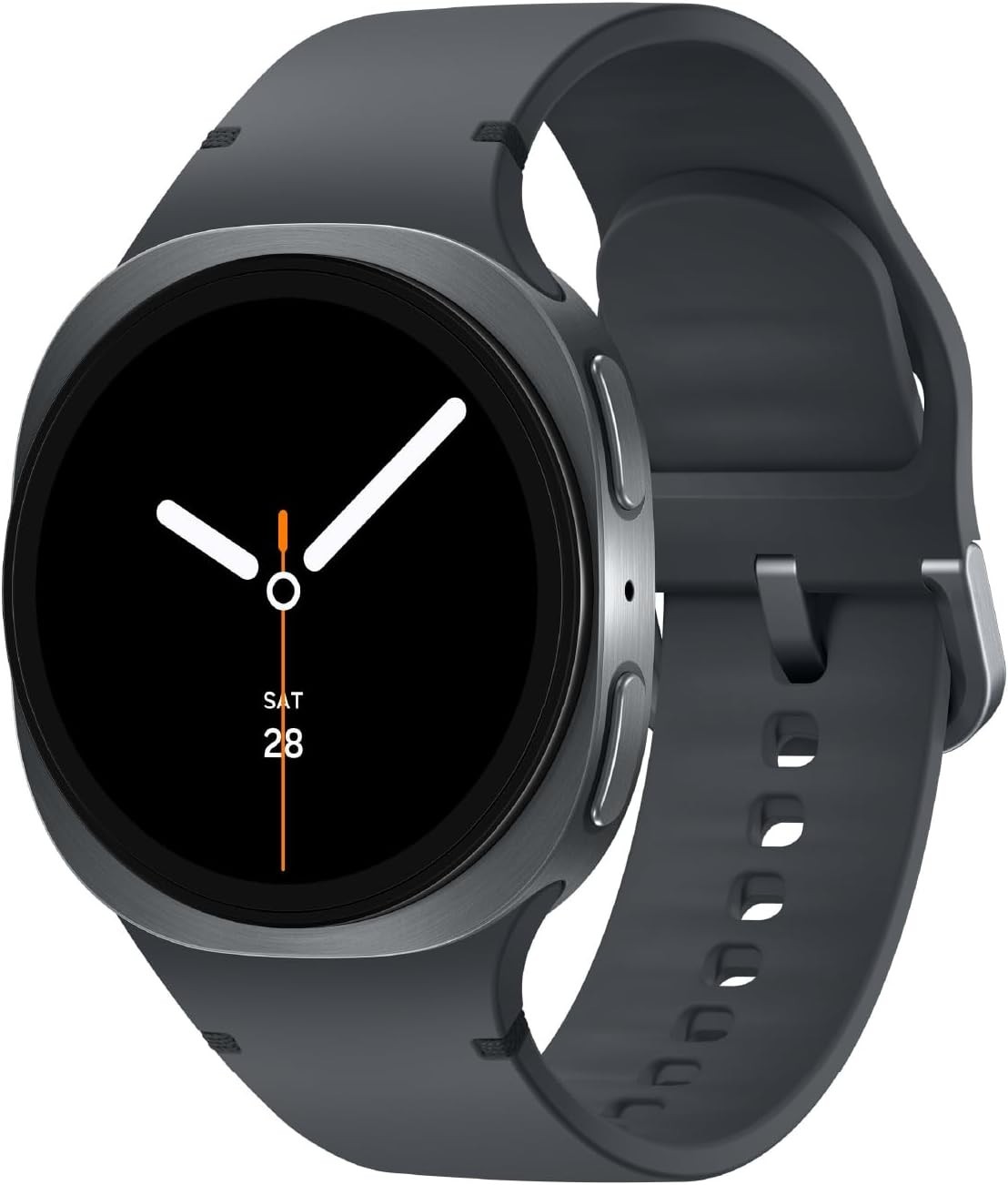

Photos from current listings. Actual item, color, and included accessories may vary.
Galaxy Watch Buying Guide
Galaxy Watch is Samsung's smartwatch line spanning value FE, mainstream aluminum, and premium titanium models, all running Wear OS with deep Galaxy phone integration. The core trade-off is display/body material and health-sensor generation versus battery life and LTE cost, not basic fitness tracking. Buy the newest sensor generation in the size and material that fits your wrist; treat older LTE variants without current health sensors as compromises.


At a glance
- Category
- Smartwatches & Fitness Wearables
- Data updated
- Nov 17, 2026
Current offers
Highlights
- Two families exist: Galaxy Watch (rotating bezel, stainless/titanium, larger battery) and Galaxy Watch FE/standard (aluminum, touch bezel, lighter).
- Sensor tiers: BioActive (optical HR+ECG+BIA) on all, but only Watch5+ add temperature; Watch8 adds antioxidant/advanced glycation index.
- LTE models add eSIM cellular and cost more in service; Bluetooth/Wi-Fi models pair to a phone and do not need a data plan.
- Case sizes differ per model: 40mm/44mm mainstream, 43mm/47mm Classic/Ultra, 41mm FE; band lugs are 20mm on most, 22mm on larger cases.
Best use cases
- Pick Galaxy Watch8 40mm LTE if you want the newest health suite (AGEs index, sleep apnea) in a compact unlocked watch—this is the listing to compare against.
- Choose Galaxy Watch FE 40mm Bluetooth if you need a basic Galaxy-phone tracker and will not use cellular; skip it only if you need ECG/temperature or long battery.
- Choose Galaxy Watch Classic (43/47mm) only if you want the physical rotating bezel and stainless build; skip it if you prioritize light weight or lowest cost.
- Avoid older Watch4/5 LTE units if you need current sensor features or long update support; buy Watch7/8 unless the discount is decisive.
Buying tips
- Match case size to wrist circumference: 40-41mm for wrists under 170mm, 43-47mm for 170mm+, and check band lug width (20mm vs 22mm) before ordering spare straps.
- For LTE, confirm the model is carrier-unlocked with an eSIM IMEI; locked or region-specific LTE variants may not activate on your carrier.
- Prefer Bluetooth/Wi-Fi models if you always carry your phone—LTE adds monthly service cost and drains 20-30% more battery.
- Buy Watch7 or Watch8 for longest Wear OS update support; Watch4/FE generations receive fewer future OS upgrades.
Specs
| Case Sizes | 40/41mm to 43/47mm |
|---|---|
| Build Material | Aluminum vs Stainless vs Titanium |
| Connectivity | Bluetooth/Wi-Fi vs LTE eSIM |
| Health Sensors | BioActive HR/ECG/BIA ± temp/AGEs |
Related searches
What to check before buying
- Measure wrist circumference and existing band width; confirm 40/44mm or 43/47mm case fits without overhang.
- Confirm phone compatibility: Galaxy Watch works with Android 11+ (Samsung apps), but ECG/BP require a Samsung Galaxy phone.
- Verify LTE IMEI is clean and eSIM-capable with your carrier before buying unlocked LTE.
- Check charging standard: Galaxy Watch uses WPC wireless charging; a Qi pad works only if aligned, so budget for the magnetic puck.
FAQ
Data sources: eBay / Amazon listings and product attribute feeds Data updated Nov 17, 2026.
Some links on this page are affiliate links. If you buy after clicking one, we may earn a commission at no extra cost to you. This does not change which products appear here or their order. Affiliate disclosure.