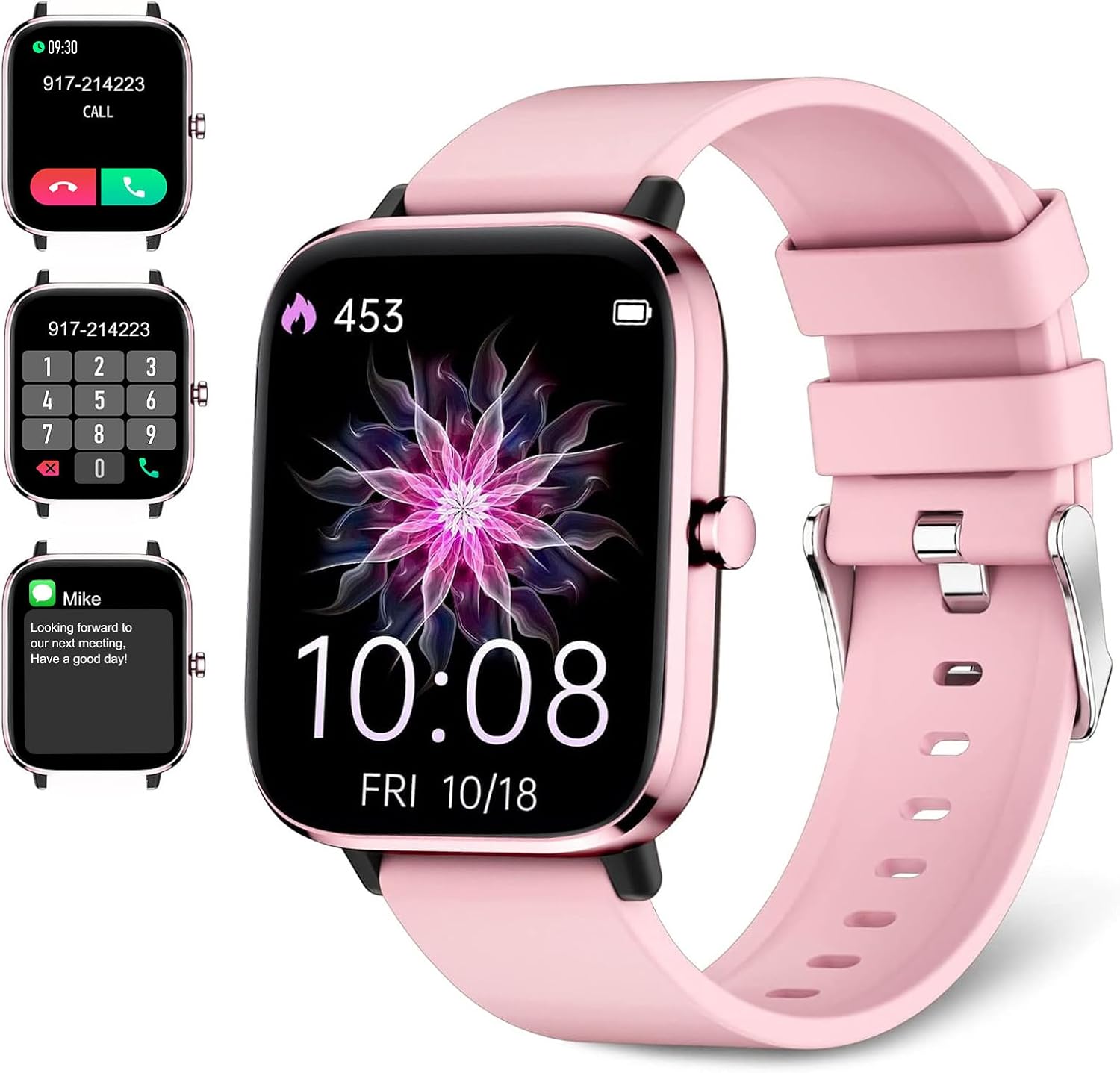

Photos from current listings. Actual item, color, and included accessories may vary.
Smartwatch With Ecg Buying Guide
An ECG smartwatch uses a single-lead or multi-electrode sensor to record the heart's electrical activity, typically for atrial fibrillation screening rather than clinical diagnosis. The core trade-off is between FDA-cleared ECG hardware with validated algorithms and generic optical sensors marketed as "ECG" that often lack regulatory clearance or true electrode circuits. Buy a watch with explicit FDA or CE clearance and published validation data; skip unregulated "ECG" claims that cannot name a regulatory pathway.


At a glance
- Category
- Smartwatches & Fitness Wearables
- Data updated
- Nov 17, 2026
Current offers
Highlights
- True ECG requires an electrical circuit: a titanium or stainless steel back electrode plus a conductive crown or side button completing the loop across the body.
- FDA-cleared single-lead ECG watches (Apple Watch, Samsung Galaxy Watch, Withings ScanWatch, Fitbit Sense) output a PDF rhythm strip for clinician review; optical-only PPG cannot produce this waveform.
- PPG-based AFib history features (Apple Watch Series 4+, Galaxy Watch 5+) use photodiodes and LEDs, not electrodes, and do not generate an ECG trace.
- Battery cost of ECG: continuous PPG plus on-demand ECG recording typically yields 18-36 hours per charge versus multiple days on non-ECG hybrid watches.
Best use cases
- Best fit: Buy an FDA-cleared ECG watch if you have paroxysmal AFib symptoms or a family history and need on-demand rhythm strips to share with a cardiologist; skip optical-only "AFib alerts" watches.
- Wrong fit: Skip ECG models if you want multi-day battery and basic step/sleep tracking—hybrid watches (Withings ScanWatch, Garmin Vivosmart) give 7-30 days without the ECG power drain.
- Best fit: Choose a cellular-capable ECG watch (Apple Watch cellular, Galaxy Watch LTE) for fall detection and emergency calling when exercising alone; skip Wi-Fi-only tiers if you leave your phone behind.
- Wrong fit: Skip any watch marketed as "ECG" without a named regulatory clearance (FDA 510(k), CE MDR) if you intend to use the trace for medical decision-making.
Buying tips
- Verify the ECG feature is FDA-cleared or CE-marked in your region—generic "health monitoring" claims without a clearance number are optical PPG, not true ECG.
- Match case size to wrist circumference: 38-41mm cases fit 130-160mm wrists; 44-49mm cases suit 160-200mm wrists and improve electrode contact.
- Confirm smartphone compatibility: Apple Watch ECG requires iPhone; Galaxy Watch ECG requires Samsung Galaxy phones in most regions; Withings and Fitbit work cross-platform.
- Check ECG electrode placement: back-crystal plus crown/button contact is standard; watches requiring two-hand touch only (no wrist contact) are less convenient for on-demand recordings.
Specs
| ECG Clearance | FDA 510(k) / CE MDR vs unregulated |
|---|---|
| Sensor Type | Electrical electrodes vs optical PPG only |
| Battery (ECG Mode) | 18-36 hr vs 7-30 day hybrid |
| Water Resistance | 5 ATM / IP68 minimum; 10 ATM swim |
Related searches
What to check before buying
- Measure wrist circumference and confirm case size (38-41mm vs 44-49mm) plus band width compatibility before ordering.
- Confirm your phone OS and region support the ECG app—Apple and Samsung restrict ECG activation by country and paired device.
- Check water resistance rating: 5 ATM or IP68 minimum for shower/sweat; 10 ATM or EN13319 for swimming and diving.
- Verify charging standard (magnetic puck vs USB-C) and expected battery life under ECG-plus-PPG use, not just baseline smartwatch mode.
FAQ
Data sources: eBay / Amazon listings and product attribute feeds Data updated Nov 17, 2026.
Some links on this page are affiliate links. If you buy after clicking one, we may earn a commission at no extra cost to you. This does not change which products appear here or their order. Affiliate disclosure.