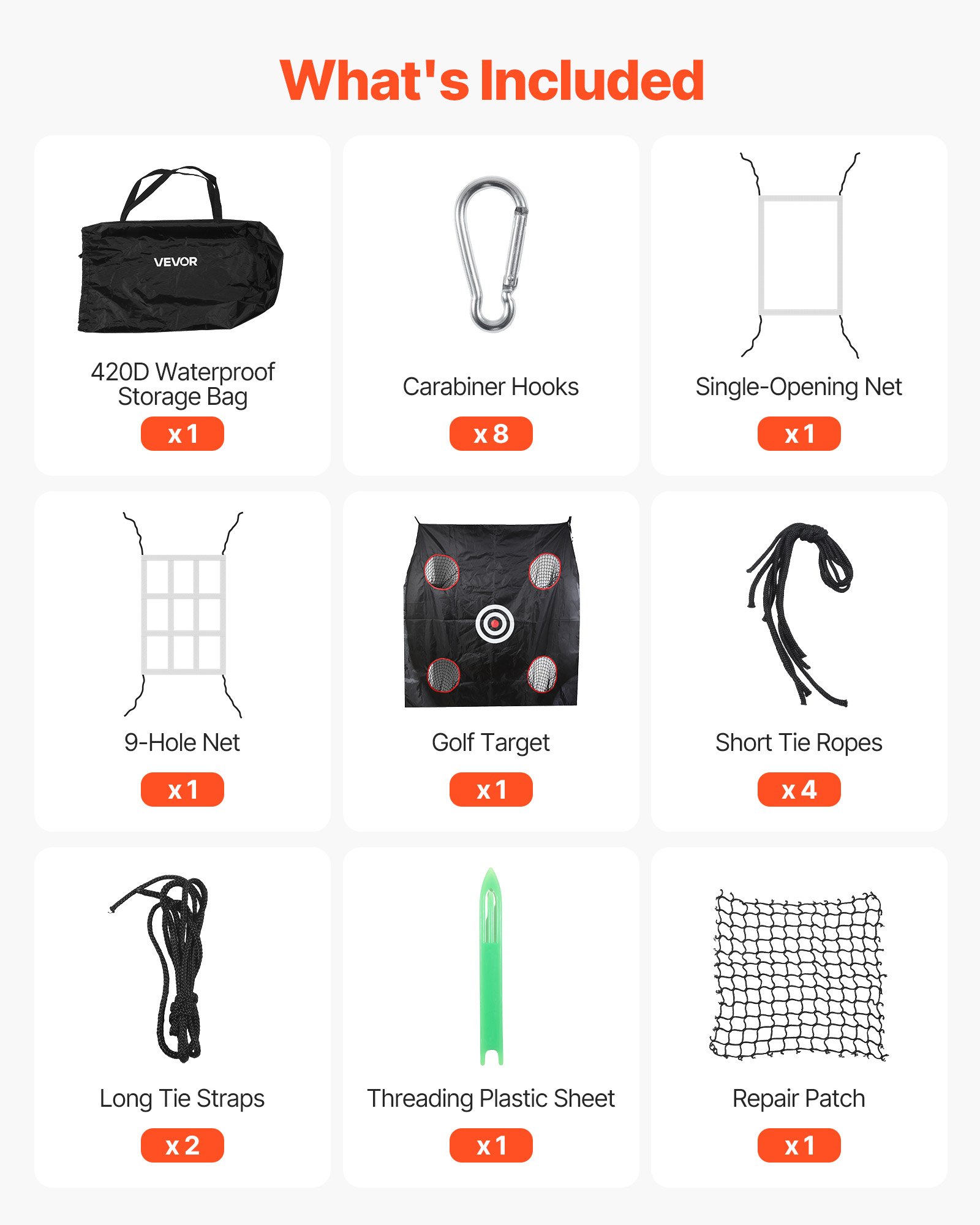

Photos from current listings. Actual item, color, and included accessories may vary.
Golf Driving Net Buying Guide
A golf driving net is a freestanding or framed containment system that stops full-speed golf balls, letting you hit driver and irons in a backyard or garage. The core trade-off is netting denier/ply and frame or anchor strength versus portability: thin single-ply nets and pop-up frames are easy to move but degrade fast under repeated driver impacts, while 3-ply knotless polyester and anchored cages survive years of practice. Buy a thick multi-ply net with a weighted or staked base if the net stays up; buy a lightweight pop-up only if you set it up and tear it down each session.


At a glance
- Category
- Golf Training, Shoes & Gloves
- Data updated
- Nov 17, 2026
Current offers
Highlights
- Netting grade: 3-ply knotless polyester (roughly 420D-1000D) absorbs driver ball speed; single-ply knotless or knotted nylon wears through at the impact zone.
- Cage geometry: 10x10x10 ft gives full swing clearance for driver and wedges; 7x7-8x8 ft nets force shorter backswings and miss high toe shots.
- Frame and anchoring: steel tube frames or weighted bases hold shape; pop-up fiberglass poles flex, tip in wind, and need sandbags or ground stakes.
- Target and side panels: a separate target panel or suspended impact flap takes the wear, and side panels stop shanks that escape open-sided nets.
Best use cases
- Backyard full-bag practice: pick a 10x10x10 ft cage with 3-ply knotless polyester, steel frame and ground stakes — this is the durable standard for driver work.
- Garage or indoor winter practice: choose a net sized to your ceiling height with a weighted base and no stakes; skip tall cages that won't clear the door frame.
- Frequent setup/teardown or travel: a pop-up net is acceptable only with sandbags and a dedicated impact panel; skip thin single-ply pop-ups for daily driver use.
- Multi-sport households: a cage marketed for baseball and golf works for golf only if the golf-side net is at least 3-ply; skip baseball practice netting for golf ball speeds.
Buying tips
- Match net face width to your miss pattern: a 10 ft wide cage covers a full driver arc; 7 ft nets require centered alignment and shorter swings.
- Check height against your ceiling or fence line: 10 ft cages need about 12 ft clearance for a full driver follow-through; 7-8 ft nets suit irons and wedges.
- Demand 3-ply knotless polyester or equivalent multi-ply netting; single-ply and knotted nylon abrade at the impact point and fail first.
- Confirm anchoring hardware: steel ground stakes for lawn, sandbags or weighted base for patio/garage; pop-up frames without ballast tip in wind.
Specs
| Netting Grade | 3-ply knotless polyester vs single-ply |
|---|---|
| Cage Size | 10x10x10 ft vs 7-8 ft cube |
| Frame Type | Steel tube vs pop-up fiberglass |
| Anchoring | Ground stakes vs weighted sandbags |
Related searches
What to check before buying
- Measure the space: cage footprint plus 3-5 ft behind the net for ball deceleration and 8-10 ft of swing depth in front.
- Check ceiling or fence height clears the cage top by at least 1-2 ft so high wedges don't balloon over.
- Confirm surface: lawn accepts stakes; concrete or patio needs a weighted-base frame and no ground penetration.
- Verify companion parts: hitting mat, tee, and a separate target panel are usually not included and must be sized to the cage.
FAQ
Data sources: eBay / Amazon listings and product attribute feeds Data updated Nov 17, 2026.
Some links on this page are affiliate links. If you buy after clicking one, we may earn a commission at no extra cost to you. This does not change which products appear here or their order. Affiliate disclosure.