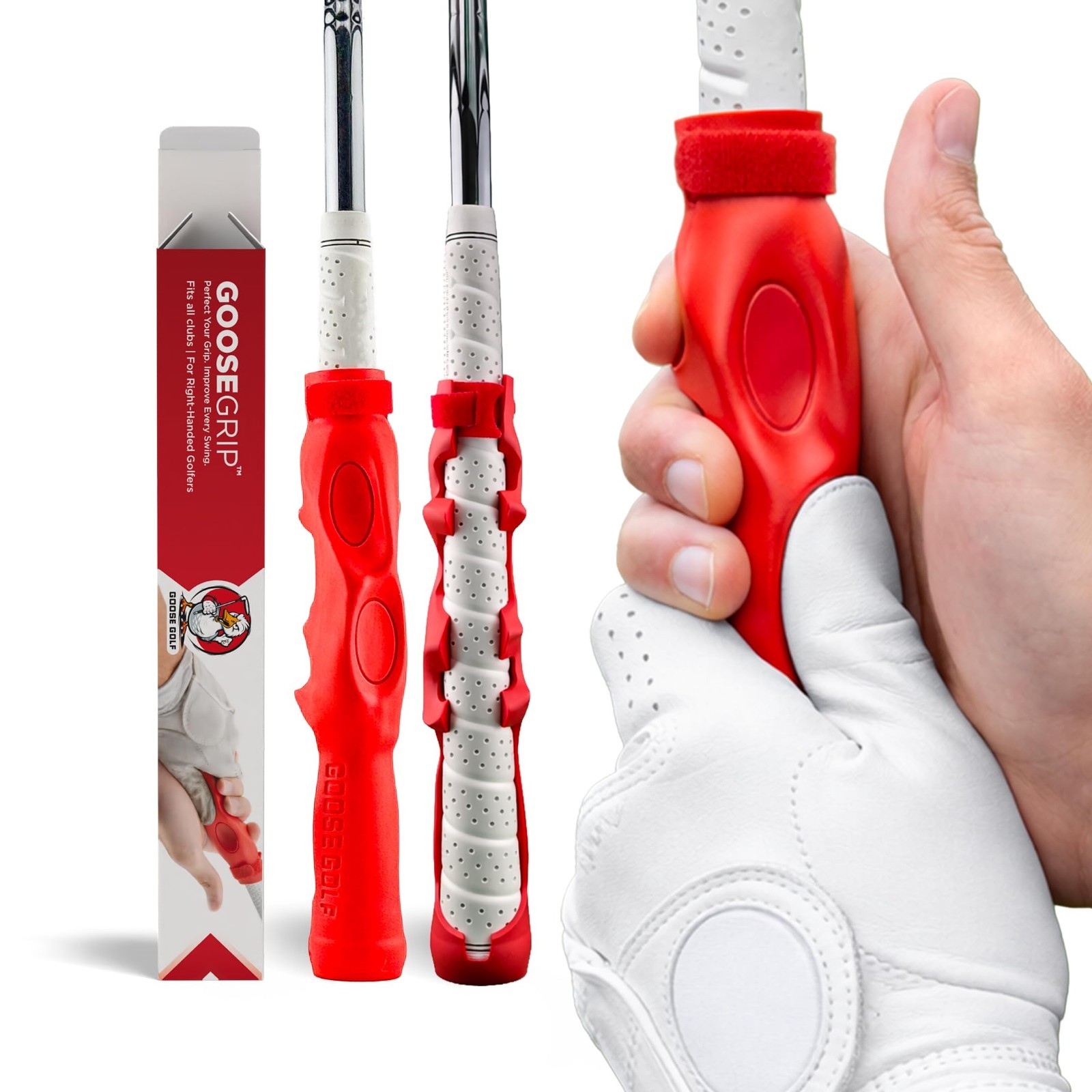

Photos from current listings. Actual item, color, and included accessories may vary.
Golf Grip Trainer Buying Guide
A golf grip trainer is a practice aid that physically guides your hands into the correct neutral, weak, or strong position on the club. The core trade-off is between rigid molded guides that enforce exact finger placement and flexible straps that only remind you of wrist angle. Buy a rigid full-hand guide if your grip is fundamentally wrong; buy a wrist-angle strap if your hand placement is already sound but you break down at the top of the swing.


At a glance
- Category
- Golf Training, Shoes & Gloves
- Data updated
- Nov 17, 2026
Current offers
Highlights
- Molded two-piece grip trainers lock the thumb and V of the hand into a fixed neutral position, forcing correct knuckle count on a scale of 1 to 3.
- Wrist-strap trainers use a rigid L-shaped plate along the back of the lead hand to prevent cupping or bowing through impact.
- Universal-fit designs slide over standard grips up to 0.600-inch core diameter and work on driver through wedge without regripping.
- Training grips with reminder ribs run the full length of the handle, giving tactile feedback on every swing rather than only at address.
Best use cases
- Best for beginners slicing the ball: pick a full molded hand-position trainer that sets a neutral-to-strong grip and trains knuckle visibility.
- Best for mid-handicappers fighting a hook: choose a wrist-angle strap that restricts lead-wrist roll and enforces a square clubface at impact.
- Best for range-only practice: a clip-on or slip-on guide that fits all clubs lets you alternate between trainer and normal grip without tools.
- Wrong fit: if you need on-course feedback during a real round, skip bulky molded trainers and use a low-profile training grip installed on a spare club.
Buying tips
- Match trainer type to your fault: molded hand guides fix hand placement; wrist straps fix clubface control and wrist breakdown.
- Check fit range: most slip-on guides accept grip diameters from 0.580 to 0.600 inches, covering standard and midsize grips.
- Prefer trainers with left- and right-hand versions — a right-handed model will reinforce the wrong wrist angle for a left-handed golfer.
- For training grips, choose a reminder rib or flat-side profile only if you want permanent feedback; smooth training grips feel closer to a real club.
Specs
| Trainer Type | Molded hand guide vs wrist strap |
|---|---|
| Grip Fit Range | Standard 0.580-0.600 in |
| Hand Orientation | Right-hand or left-hand specific |
| Club Compatibility | Driver through wedge; putter excluded |
Related searches
What to check before buying
- Measure your current grip diameter at the butt end — trainers sized for standard 0.600-inch grips will split or slip on jumbo 0.640-inch grips.
- Confirm hand orientation: right-handed and left-handed models are not interchangeable, and ambidextrous straps often compromise the lead-wrist plate.
- Check whether the trainer fits over an existing grip or replaces it — slip-on designs require no regripping, while training grips need solvent and tape.
- Verify club compatibility: most universal trainers fit driver through wedge, but oversized putter grips exceed the fit range.
FAQ
Data sources: eBay / Amazon listings and product attribute feeds Data updated Nov 17, 2026.
Some links on this page are affiliate links. If you buy after clicking one, we may earn a commission at no extra cost to you. This does not change which products appear here or their order. Affiliate disclosure.