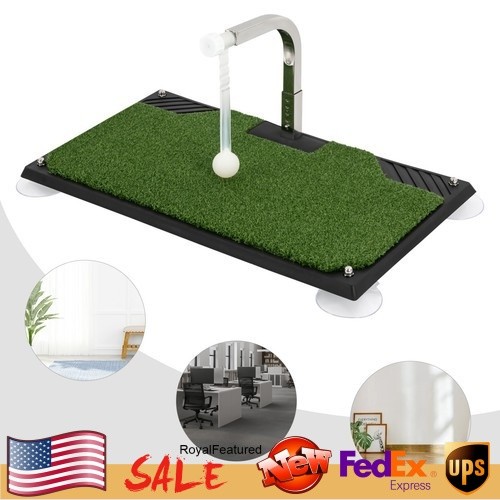

Photos from current listings. Actual item, color, and included accessories may vary.
Golf Swing Trainer Buying Guide
A golf swing trainer is a practice aid that ingrains swing plane, tempo, and impact position through guided resistance, alignment, or feedback—not a club replacement. The core trade-off is between hinged/guided trainers that enforce mechanics and simple weighted or alignment aids that only promote feel. Buy a hinged or resistance trainer if you need to correct path and wrist action; choose a simple alignment or weighted aid only if your mechanics are already sound and you want warm-up or tempo work.


At a glance
- Category
- Golf Training, Shoes & Gloves
- Data updated
- Nov 17, 2026
Current offers
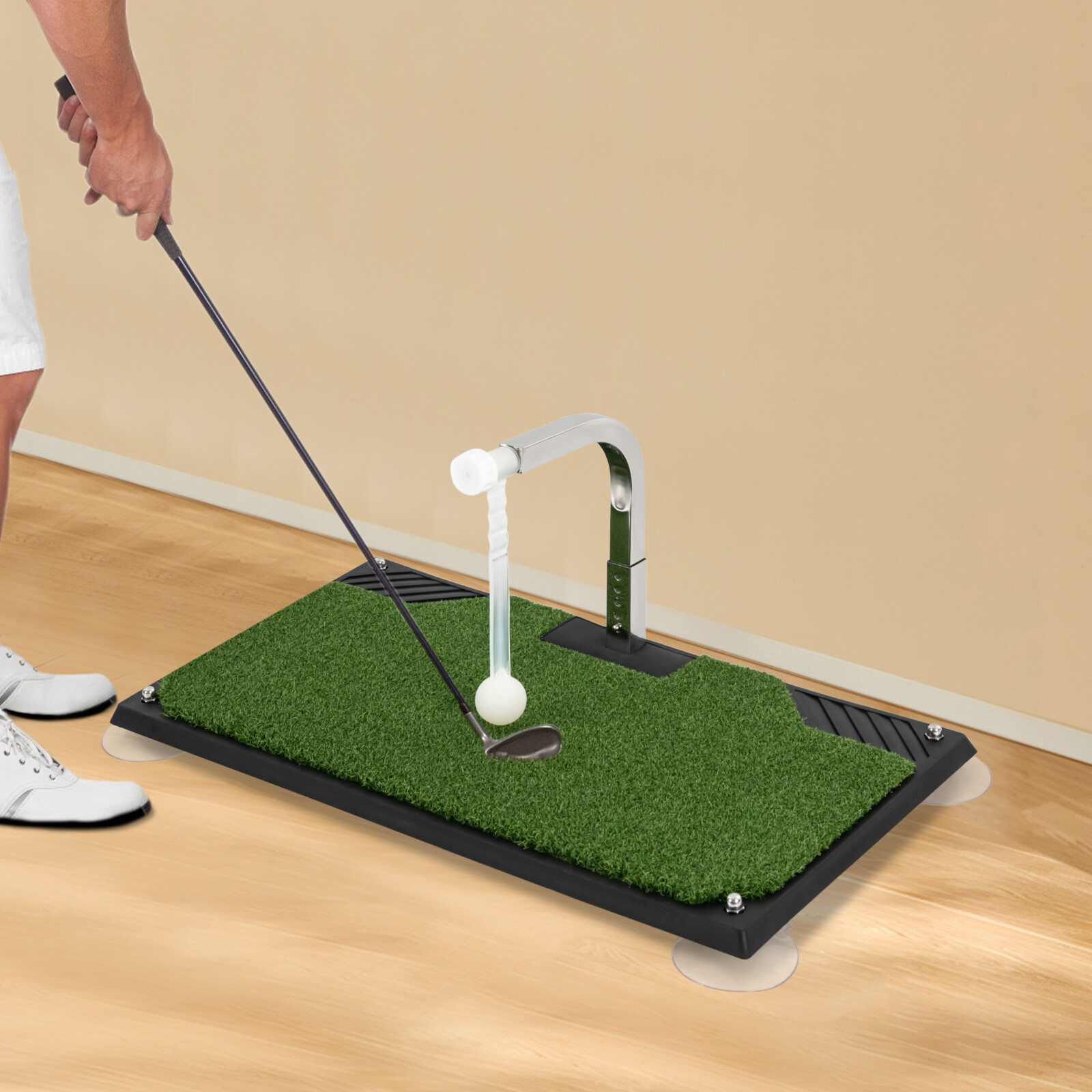
Highlights
- Hinged wrist trainers lock the lead wrist through impact to correct early release and casting; non-hinged aids only add weight or alignment without enforcing wrist position.
- Resistance-fan and weighted-club trainers overload the swing to build speed and sequence; they do not constrain path, so they suit tempo work, not slice correction.
- Path/plane guides use physical rails or hoops to force an in-to-out or neutral swing plane; they are the most prescriptive and least forgiving for beginners.
- Indoor simulator-style trainers with adjustable gears change resistance or plane angle across settings, letting one unit serve multiple swing faults without club contact.
Best use cases
- Best fit for slicers and early-release players: a hinged wrist trainer or plane guide—skip pure weighted aids, which reinforce the same over-the-top path.
- Best fit for low-handicap tempo and speed work: a resistance fan or weighted club—skip hinged trainers, which restrict the release you already control.
- Best fit for small indoor spaces: a compact hinged or gear-adjustable trainer that needs no ball flight—skip full-swing plane hoops that require ceiling and side clearance.
Buying tips
- Match the aid to the fault: hinged wrist trainer for casting/early release, plane guide for over-the-top path, weighted/resistance club for tempo and speed.
- For indoor use, measure ceiling height and side clearance first; full-swing plane trainers need roughly a club length plus headroom, while hinged wrist trainers work in a low room.
- Choose adjustable-resistance or multi-gear trainers if you want one unit for both slow-motion drills and full-speed reps; fixed-resistance aids limit progression.
- Prefer trainers with a real grip and shaft length matched to your clubs—standard men's, senior, or junior—so wrist and plane geometry transfer to your actual swing.
Specs
| Trainer Type | Hinged wrist / Plane guide / Weighted |
|---|---|
| Adjustability | Fixed vs multi-gear resistance/plane |
| Swing Space | Indoor low-room vs full-arc clearance |
| Grip & Length | Standard / Midsize / Senior / Junior |
Related searches
What to check before buying
- Measure ceiling height and side clearance in your practice space; confirm the trainer's full-swing arc fits with at least a club length of headroom.
- Confirm grip size and shaft length match your set (standard, midsize, senior, junior) so the trainer trains the same hand and wrist geometry.
- Check whether the trainer requires a ball, mat, or mirror to be useful; many indoor aids need only open floor, but plane guides may need alignment sticks.
- Verify resistance or gear settings are adjustable if you plan to progress from slow-motion drills to full-speed swings with one device.
FAQ
Data sources: eBay / Amazon listings and product attribute feeds Data updated Nov 17, 2026.
Some links on this page are affiliate links. If you buy after clicking one, we may earn a commission at no extra cost to you. This does not change which products appear here or their order. Affiliate disclosure.